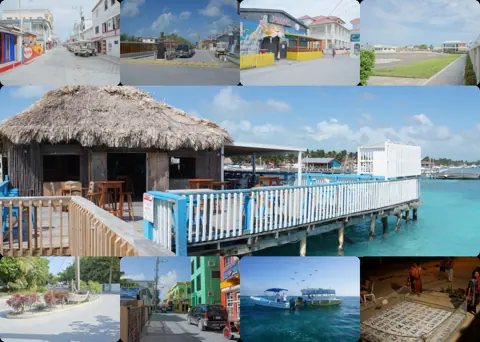
Hol Chan is a fisheries management area before it is a snorkel site. It was declared in July 1987, according to the Fisheries Department, under the Fisheries Act, as the reserve's own site states on its home page, and it still sits under the Belize Fisheries Department, not the tourism board. That explains the fee, the zones and most of the rules your guide will brief you on: they come from fishing regulations that happen to protect snorkellers' favourite reef as well.
How much is the Hol Chan fee, and who collects it?
The reserve sells its own ticket, the Holchan Marine Reserve Day Pass, with four categories: Belizean or non-Belizean, aged 12 and under or 13 and over. When we read it, the shop showed a price range of "$0.00 – $30.00" but did not display the price for each category, and it did not label the currency.
The per-person figure comes from local reporting. The San Pedro Sun reported on 1 August 2024 that tourists would pay US$15 from that day, up from US$10, while Belizeans with valid ID kept the previous rate. The paper said a US$20 fee had first been proposed and was cut after objections from tour guides and operators. It quoted the reserve's Executive Director, Ian Pou, saying the old fee could not "support additional tasks and better reserve patrolling".
The Belize dollar is fixed at BZ$2 to US$1, a peg set on 11 May 1976, so US$15 equals BZ$30. That matches the top of the shop's range, but the shop does not say so itself.
For scale, the reserve regulations as consolidated in the Laws of Belize (S.I. 57 of 1987) set the tourist fee at $5 a day for the original reef, seagrass and mangrove zones and $7 for Zone D, with children under twelve exempt. The fee has been raised several times since.
What changes between the channel and Shark Ray Alley?
A trip that stops at both the channel and Shark Ray Alley crosses two zones with different rules. The Belize Tourism Board places the reserve about four miles south of San Pedro. The Fisheries Department describes the channel itself as a break in the reef about 23 metres wide, whose walls drop close to vertically to about 10 metres. "Hol Chan" is Maya for "little channel".
| Stop | Zone | What the Fisheries Department allows |
|---|---|---|
| Hol Chan Channel | Zone A | Snorkelling and diving; no fishing, no fish feeding, no gloves, no gear beyond mask and fins |
| Shark Ray Alley | Zone D | Snorkelling; no scuba diving; guides may feed sharks from the boat |
| Mexico Rocks | Zone H | No-take zone; no fishing, no feeding, no gloves |
Shark Ray Alley, a shallow sandy plateau known for its resident nurse sharks and southern stingrays, lay just south of the original reserve. The 1999 amendment regulations (S.I. 101 of 1999) folded it into a new Zone D as an "exclusive recreation area". They banned fishing, "feeding of fish by tourists" and "touching of flora or fauna", and limited commercial recreational vessels to one hour at a time in those areas.
The feeding rule is easy to misread. The 1999 text bans feeding by tourists; the Fisheries Department's current page says feeding of sharks "is allowed by tour guides from within the boat". So a guide throwing food from the deck is within the rules as published, while a visitor holding bait in the water is not.
Why the reserve is much bigger than the snorkel sites
On 17 February 2016 the government expanded the reserve to take in Mexico Rocks, the Mata and Frances lagoon mangroves and the Los Bajos and Los Salones shoals. The reserve's 2019-2024 management plan puts the area at 103,058 acres (41,706 hectares), about 25 times its 1987 size. It also records visitation rising from 40,000 in 1994 to more than 85,000 in 2017.
Official figures have not caught up everywhere. The Tourism Board's page still describes four zones and 13,632 acres, while the Fisheries Department speaks of eight zones. The 2024 press report mentions "all 15 zones". For a snorkeller the practical point is the same: one daily fee covers the reserve stops on your trip.
Is Hol Chan part of the UNESCO World Heritage reef?
No, although it is often described that way. The Belize Barrier Reef Reserve System was inscribed in 1996 as seven protected areas, from Bacalar Chico at the northern tip of Ambergris Caye to the Sapodilla Cayes in the south. Hol Chan is not among them.
The reef itself is continuous, and its UNESCO status affects the whole coast. The World Heritage Committee placed the site on its danger list in 2009 and removed it on 26 June 2018, citing Belize's moratorium on oil exploration across its maritime zone and stronger mangrove protection. For the history and legal basis of the reserve you are visiting, look to the Fisheries Department rather than UNESCO.
Choosing a guide and checking what you are paying for
The reserve's regulations place duties on boat captains, not only on visitors. Captains must explain the rules to passengers, fly the divers-down flag and allow only certified divers, or those on an approved training course, to use scuba tanks. Under Chapter 275S of the Laws of Belize, the Belize Tourism Board states that working without a valid Tour Guide Licence is an offence. The board publishes a searchable list of licensed guides, and you can check a name there before booking.
When comparing tours, ask three things. Is the reserve fee included, and at what rate per person? Does the trip stop at Zone D only, or at the channel and Mexico Rocks too? Does anyone in your group plan to dive, which rules out Shark Ray Alley for them? If you are still on the mainland, our guide to getting from Belize City to Caye Caulker and San Pedro covers the water taxi and flight options. The reserve also has an office on Estrella Street in Caye Caulker.