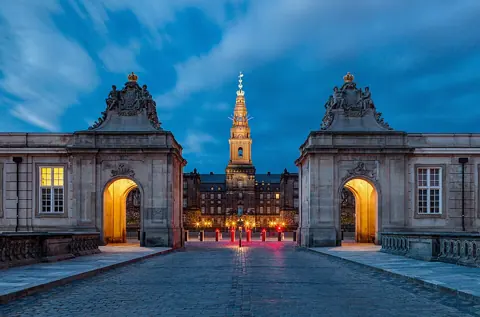
Danish design's international reputation rests less on a single unifying aesthetic than on a handful of specific companies that each solved a design problem thoroughly enough to become internationally recognizable: a children's toy system engineered for near-infinite compatibility, a brewery that shaped Danish drinking culture and civic architecture, and a hi-fi and audio brand built on minimalist form. Each offers a visitor a genuinely different kind of access.
LEGO House: the one built specifically for visitors
LEGO, founded in Billund in 1932 and still headquartered there, is Denmark's best-known global export by most measures, and its purpose-built visitor attraction reflects that scale directly. According to LEGO House's own site, the venue in Billund gives visitors access to 25 million LEGO bricks across interactive "Experience Zones," with standard tickets starting from 219 DKK (with a discount for booking online), a season pass from 449 DKK, and a combination ticket with the nearby LEGOLAND Billund theme park from 649 DKK. It is a distinct venue from LEGOLAND itself — a building designed around hands-on construction and design history rather than rides.
Billund sits well outside Copenhagen, roughly in the middle of the Jutland peninsula, so this is a dedicated day trip or a stop on a longer Danish itinerary rather than an add-on to a Copenhagen city visit. If LEGO's design history and manufacturing scale specifically interest you, plan the transport time to Billund as a separate leg rather than assuming it fits inside a Copenhagen-based schedule.
The engineering detail worth knowing before you go: LEGO's actual design achievement is a plastic brick precise enough that pieces produced decades apart still fit together within extremely tight tolerances, a manufacturing standard the company has maintained across a genuinely enormous production volume. LEGO House's exhibitions walk through that history — early wooden toys, the shift to plastic, and the specific engineering choices behind the brick's clutch power — in more depth than a passing visitor would otherwise piece together just from playing with the product.
Carlsberg: a genuine industrial site, but confirm the current format
Carlsberg, founded in Copenhagen in 1847, built its original brewery on a site in the Valby/Vesterbro area that has since been substantially redeveloped into a mixed residential, commercial and cultural district still carrying the Carlsberg name and history. A visitor attraction exists on or near the historic site, covering the company's brewing history and architecture, including some of its distinctive historic buildings.
This guide could not confirm the current exact visitor format — whether it includes a working brewery tour, tasting, or is primarily a self-guided historical walk through the redeveloped district — from an official source accessed during research, and will not describe a specific experience it cannot verify. If a Carlsberg visit is a priority, check the current offering directly on Carlsberg's own visitor site before building it into your itinerary, since redevelopment projects of this kind tend to change their public-facing format over time.
Bang & Olufsen: products, not a public factory
Bang & Olufsen, founded in 1925 in Struer in northwestern Denmark and known internationally for minimalist, design-forward audio and television equipment, does not have a confirmed public factory tour or dedicated visitor museum comparable to LEGO House. Its products are most accessible to visitors through its own retail stores and through Designmuseum Danmark's broader collection, where B&O pieces are held up as examples of the mid-to-late 20th century Danish industrial design tradition. This guide did not find a confirmed, currently operating public visitor site specific to Bang & Olufsen and will not imply a tour exists where none could be verified.
Designmuseum Danmark: the throughline for all three
Designmuseum Danmark, at Bredgade 68 in Copenhagen, covers Danish and international industrial design, applied arts and craftsmanship, with rotating exhibitions that have included Danish design from the 1920s through the 1970s and dedicated retrospectives of individual designers. Unlike a single-company museum, it places LEGO's plastic-brick engineering, Carlsberg's branding and architecture, and Bang & Olufsen's product design inside a shared national design tradition, which makes it a genuinely useful stop if your time only allows for one museum covering all three rather than separate visits to each company's own site.
What actually ties these together, and what doesn't
LEGO and Carlsberg both give a visitor real physical sites tied to their history, though at different scales and with Carlsberg's current format less clearly confirmed than LEGO House's. Bang & Olufsen, by contrast, is closer to a design story told through its products in stores and museum collections than through a dedicated visitor site — a legitimate but genuinely different kind of access, and one worth being honest about rather than implying a factory tour that doesn't exist.
What this guide does not cover
This article does not cover other well-known Danish design names — Georg Jensen, Royal Copenhagen, or the broader Danish furniture design tradition associated with figures like Arne Jacobsen and Hans Wegner — each of which has its own separate visitor sites worth checking independently, much as Finland's own design tradition tells a similar story through a different set of companies.