Why do these patterns cluster around certain sites?
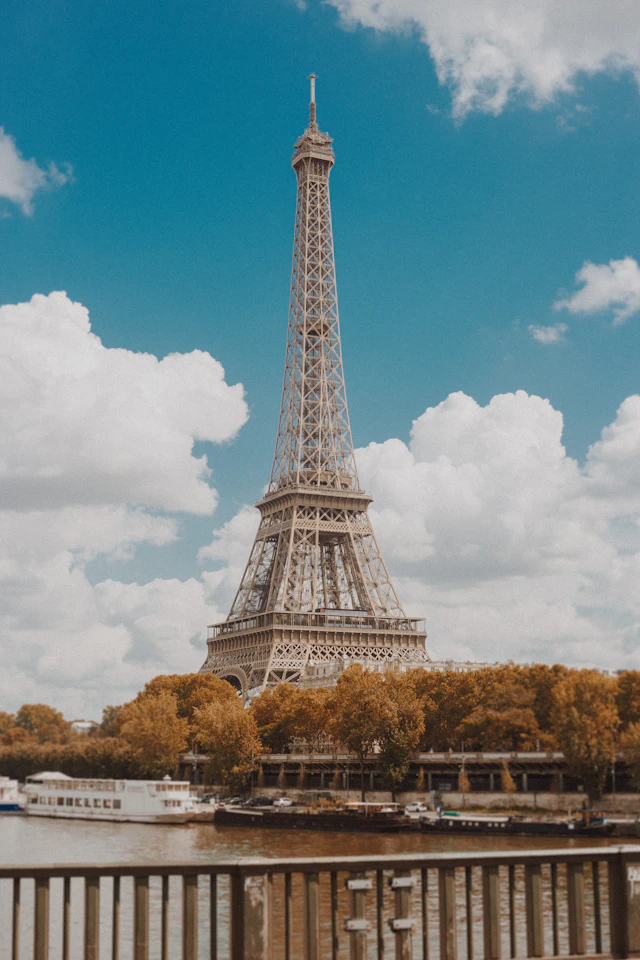
Sacré-Cœur, the Eiffel Tower, the Louvre, and the busiest metro and RER lines share one feature that makes them attractive to petty theft and low-level scams: dense, distracted crowds of people who do not know the area and are looking up, not around. The Paris Police Prefecture runs sustained prevention campaigns at exactly these locations, including patrols, video surveillance, and partnerships with RATP and SNCF, because the pattern is well understood rather than random.
This is a risk-literacy issue, not a reason to avoid these places. Millions of visitors pass through them without incident every year; the goal is to recognise the handful of recurring approaches so you are not caught off guard by something designed to look unusual or urgent.
What does the fake petition approach look like?
According to the Paris Police Prefecture's tourist safety guidance, a frequent approach — particularly around the Latin Quarter and Notre-Dame — involves young people, sometimes presenting themselves as deaf or mute and claiming to collect for an association, who hold out a clipboard or petition and ask you to sign and give money. The Prefecture states plainly that these are fake petitions: signing and paying does not support a real cause, and it funds clandestine operations instead.
The same page names two related street patterns to recognise: unlicensed street selling (illegal in France, and a route to counterfeit or overpriced goods) and the shell game (jeu du bonneteau), a rigged card or cup game where accomplices posing as fellow players win in front of you specifically to draw you into a bet you cannot win. Both are criminal offences to run, not grey-area hustles.
What about the bracelet and ring approaches often reported near Sacré-Cœur?
Visitors to Sacré-Cœur and other busy tourist spots commonly report a version of the same idea in different costumes: someone ties or offers a "free" friendship bracelet onto your wrist before demanding payment, or someone "finds" a gold ring on the ground in front of you and offers to sell it, or split its value with you. Both share the same mechanic as the fake petition — a fast, friendly-seeming approach designed to get money or a commitment from you before you have had time to think.
The same general defence applies to all of these: do not let a stranger place anything on your body or hand you an item you did not ask for, and treat any unsolicited "gift," "find," or urgent request near a monument as a prompt to keep moving rather than to engage.
How does distraction pickpocketing work on line 1 and the RER B?
Crowded transit corridors — particularly metro line 1 (which runs past the Louvre, Champs-Élysées, and other major sights) and the RER B (the direct link to and from CDG airport) — see a different tactic: distraction theft during the crush of boarding, alighting, or standing near the doors. The Prefecture's own advice on theft specifically flags the moments when crowds move on and off trains, and in escalators, as high-risk for pickpocketing, and recommends having your ticket or pass out and ready before you reach the barrier so you are not opening a wallet or bag in public.
Other confirmed, practical points from the same guidance:
- Prefer a bag worn across the front of your body over a backpack, which is harder to watch.
- Carry only the cash you need and split cards, cash, and ID across more than one place.
- Never leave a phone, wallet, or bag on a café table, a chair back, or a coat hung on a hook — a thief can take it from behind you while you are not looking.
- Note your phone's IMEI number in advance so you can report it if the phone is stolen.
- If you are grabbed for or lose an item, alert people nearby immediately rather than chasing alone.
What should you actually do if something happens?
Call 17 for police, or 112 from a mobile — both reach Police-Secours and are free, and 112 works even without a French SIM. Describe who you are (victim, witness, or accompanying someone), exactly where you are, and what happened; for theft, a physical description of the person and which direction they went helps far more than a general description of the event. Two other numbers matter in an emergency: 15 reaches SAMU for a medical emergency, and 18 reaches the fire brigade (sapeurs-pompiers) for fire, accidents, or someone in danger. 114 is a dedicated number for people who are deaf or hard of hearing, reachable by SMS or fax.
Filing a report does not require fluent French. The Prefecture operates bilingual officers at many stations and in patrols, and uses a system called SAVE (Système d'Assistance des Victimes Étrangères) that lets a foreign visitor file a complaint and receive a copy in one of 30 languages, simplifying any follow-up with an embassy or insurer back home.
Before you head out
None of this calls for constant suspicion — the vast majority of interactions near any Paris monument are exactly what they appear to be. Treat any unsolicited approach involving money, a signature, or an item placed in your hand as your cue to keep walking, keep your bag zipped and in front of you on crowded transit, and know that 17 or 112 is one free call away if you do need it.