Guinness, Irish whiskey and a long list of American tech and pharma headquarters all sit in or near Dublin for different reasons, and treating them as one story — "Ireland makes stuff and companies like it here" — misses what's actually distinct about each.
Guinness Storehouse: what you're actually paying to see
Guinness is genuinely brewed at St. James's Gate in Dublin, the site the Guinness Storehouse visitor attraction occupies. But it's worth being precise about what the visitor experience itself is. According to the Storehouse's own site, the attraction is built around experiencing "the history, heart and soul of Ireland's most iconic beer" — brand storytelling and heritage presentation across multiple floors, rather than a guided walk through an active production line. It has been recognised as a leading tourist attraction and holds Green Tourism certification, both of which speak to its quality as a visitor experience rather than to its authenticity as an industrial site visit.
This distinction matters if what you actually want is to see brewing in progress: the Storehouse is a museum-and-brand-experience built at a real historic brewing site, not a working factory tour where you watch beer being made in real time.
Irish whiskey: distillery tours versus gift shops
Several Dublin-based whiskey brands operate visitor attractions under a "distillery" name, and the honest distinction to make before booking is whether whiskey is actually being distilled on-site during your visit, or whether the site is historic, branded retail space built around a name that once meant an active distillery. Jameson's own materials reference a separate "Midleton Distillery Collection" in County Cork, which is a signal — though this guide could not fully confirm current production details from the distillery's own site — that large-scale Jameson production has moved away from central Dublin, with the Dublin visitor site functioning more as a branded experience and tasting venue than an active production tour.
Smaller, newer Dublin-based whiskey producers that emphasise active on-site distilling as part of their pitch are generally more transparent about this distinction than long-established global brands whose Dublin visitor site predates or postdates their actual current production geography — check specifically for that claim rather than assuming any "distillery tour" involves live distilling that day.
The multinational tech and pharma presence
Ireland, and Dublin specifically, hosts a large concentration of multinational company operations, particularly in technology, pharmaceuticals and financial services. According to IDA Ireland, the state agency responsible for attracting foreign direct investment, more than 1,800 multinational companies have established operations in Ireland, and roughly half of the agency's client companies have operated in the country for more than ten years — a detail worth noting specifically because it counters a common assumption that this is a recent or unstable arrangement driven purely by short-term tax advantage.
IDA Ireland's own stated reasons for this concentration include infrastructure, talent and education, quality of life for employees and leadership, and Ireland's broader economic positioning as a stable base for accessing European markets. Ireland's low corporate tax rate is also widely and consistently cited, by IDA Ireland and independently, as part of what attracts this investment, though this guide could not independently confirm the current specific headline corporate tax rate from an official government source at the time of writing — check Ireland's Revenue Commissioners (revenue.ie) directly for the current, exact rate rather than relying on a figure repeated elsewhere.
What a visitor can actually see of the tech sector
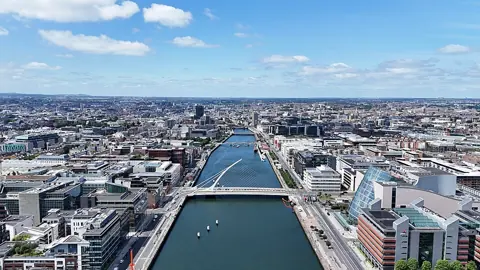
Unlike Guinness or whiskey, Ireland's tech and pharma multinational presence has essentially no public visitor attraction attached to it — corporate campuses around Dublin (in areas like the Docklands, sometimes informally called Silicon Docks) are visible from the outside as office buildings, but they are working corporate premises, not tourist sites, and this guide does not suggest treating them as such. The visible evidence of this industry, for a visitor, is largely architectural and geographic — a concentration of recognisable global company signage in specific districts — rather than anything you can tour or buy.
Buying well versus buying the story
Across all three — Guinness, whiskey and the broader "Ireland is a business-friendly hub" narrative — the pattern is the same as elsewhere in this series: there's a genuine industrial and economic reality underneath, and there's also a well-developed tourism and reputation layer built on top of it that doesn't always match one-to-one with current production reality. Asking a direct question (is this actively made here, right now?) before paying for an experience sold on that premise is the most reliable way to know which one you're getting.
What this guide does not cover
This guide does not cover specific ticket prices or current opening hours for the Guinness Storehouse or any whiskey distillery visitor site, Ireland's detailed tax code, or a comprehensive list of multinational companies headquartered in Dublin — all of which change over time and are better confirmed directly with the relevant organisation.