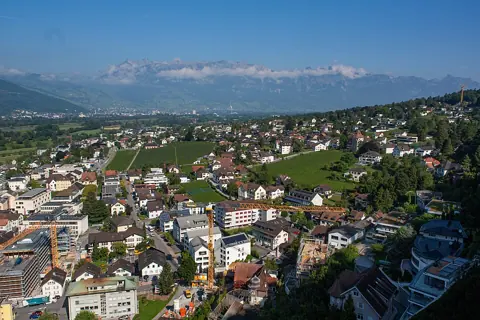
Liechtenstein is, by most measures, one of the most industrialized countries in the world relative to its size, yet a visitor walking through Vaduz would struggle to find any physical evidence of that. Its economy runs on specialist manufacturing sold business-to-business worldwide, plus a financial sector that has even less of a public face — and the one place where a visitor genuinely gets a tangible souvenir from all this is, oddly, the tourist office's passport stamp desk.
What Liechtenstein actually makes
Liechtenstein's industrial base includes precision instruments, electronics, textiles, metal manufacturing and power tools, produced by a cluster of specialist companies most consumers have never heard of because they don't sell directly to consumers. Historically, the country built a reputation in false teeth and dental products, and in precision drill chucks — the mechanism that holds a bit in a power drill — both niche, high-precision manufacturing categories that don't require a large domestic market, only technical expertise and export logistics. That history is part of why Liechtenstein industrialized so heavily despite its tiny population: a handful of specialized manufacturers scaled their exports rather than depending on serving a local consumer base that barely exists.
Hilti: the one name you might actually recognize
Hilti, the manufacturer of construction fastening systems, power tools and related equipment, is Liechtenstein's most internationally recognizable company and its largest employer. If you've been on a construction site or in a hardware store, you've likely seen Hilti's red-cased tools even without knowing they trace back to Liechtenstein. Hilti is a working industrial company, not a visitor attraction — this guide found no indication of general-public factory tours, and a company of this kind operates as an ordinary manufacturing and R&D business rather than a heritage site with a gift shop.
Financial services: bigger than the industry, and less visible still
Alongside manufacturing, financial services — private banking, trust and fund administration, and wealth structuring — form a major part of Liechtenstein's economy, drawing on the country's long-standing reputation (and, in past decades, controversy) as a jurisdiction favorable to holding and managing wealth. As with Andorra's own banking sector and Monaco's, this part of Liechtenstein's economy has essentially no visitor-facing surface: no tours, no exhibits, nothing to buy. It matters to know about mainly because it explains why a country with so few residents has such a developed capital, roads and public services.
The one thing you actually can visit: the passport stamp office
The most tangible economic-adjacent thing a visitor can do in Liechtenstein that isn't shopping for groceries is get a souvenir passport stamp from the country's tourist information office in Vaduz — not an official immigration stamp, since Liechtenstein has no border control of its own, but a novelty stamp aimed specifically at visitors who want physical proof of having been there. This guide could not confirm the office's current hours or fee from an official source in the material reviewed, so check tourismus.li or contact the tourist office directly before you build a stop around it, and remember to actually bring your passport.
Should you go looking for "industrial tourism" here?
Given how little of Liechtenstein's real economy is open to the public, it's worth being direct: this is not a country where you plan a day around seeing manufacturing. If precision industry and dental-product history genuinely interest you, the more realistic outcome is understanding the story rather than seeing the sites — the National Museum in Vaduz covers Liechtenstein's history and could plausibly touch on its industrial development, though this guide did not verify current exhibit content and cannot confirm that in detail.
How Liechtenstein's model differs from its neighbors' microstates
It's worth contrasting Liechtenstein's approach with Andorra's or Monaco's, both covered elsewhere on VoyageWindow. Andorra converts its low-tax status directly into a retail experience a visitor walks through; Monaco converts its tax policy into a residency draw with a visible casino attached. Liechtenstein does neither — its low-tax and favorable regulatory environment mostly attracts manufacturing capital and financial-services registrations rather than visitor spending, which is precisely why so little of its economic success shows up anywhere a tourist would naturally look. If you come to Liechtenstein expecting a shopping-driven microstate experience similar to Andorra's, the mismatch between the country's genuine economic weight and its quiet, low-key town center can be a little disorienting.
What this says about small-state economic strategy generally
Liechtenstein's model — concentrate on a small number of specialized, export-oriented industries plus a favorable regulatory environment for financial and corporate registration — is arguably the least visitor-oriented economic strategy among the small states and territories covered in this batch. It works precisely because it doesn't need visitor spending to succeed, which is also why, unlike Andorra's ski resorts or Monaco's casino, there's no meaningful tourism infrastructure built specifically around explaining or monetizing it.
Before you plan around any of this
Don't build an itinerary around factory visits or bank tours that this guide could not confirm exist for the general public. What is confirmed and reachable is the tourist office and its passport stamp — check its current hours before you go, and treat everything else in this article as background for understanding the country rather than a list of stops.