What 2,240 metres actually does on day one
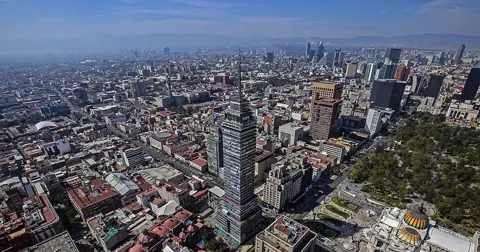
Mexico City's elevation is 2,240 metres, which the city itself puts at 7,350 feet and describes as well above the 1,500 metre threshold where altitude effects begin. Air pressure falls with elevation while the proportion of oxygen stays the same, so each breath delivers less oxygen than it would at the coast. Your body compensates by breathing faster and working harder, which is why a flight of stairs in the Centro Historico feels like three.
The clinical picture is reassuring but not empty. The UK's National Travel Health Network and Centre classifies 1,500 to 3,500 metres as "high altitude" and notes that acute mountain sickness usually occurs above 2,500 metres, though susceptible individuals can experience illness below this. It reports that roughly 9 to 25 percent of unacclimatised people ascending to 2,000 to 3,000 metres develop acute mountain sickness. Mexico City sits inside that band. Most visitors feel nothing worse than tiredness; a real minority get a headache, poor appetite and broken sleep.
Timing matters more than most people realise. Symptoms typically start 6 to 10 hours after arriving at altitude, not on the walk out of the terminal. If you feel fine at noon and rough at 22:00, that is the expected pattern rather than something you ate.
Alcohol, exercise and the first evening
Two things reliably make a first night at altitude worse, and both are easy to schedule away. Alcohol is the first: the city's own guidance is to increase water intake and avoid alcohol and smoking, and a drink at 2,240 metres tends to land harder than the same drink at sea level while also worsening dehydration. Exertion is the second. NaTHNaC lists exertion on arrival at altitude among the individual risk factors for altitude illness, alongside a previous history of it and normal residence below 900 metres.
The practical version is not abstinence for the trip. It is skipping the welcome mezcal on the first night and moving the long walk, the bike ride or the football match to day two or three.
Hydration is the one thing worth actively doing rather than avoiding. Dry mountain air, faster breathing and a warm afternoon dehydrate you quietly, and dehydration produces a headache indistinguishable from a mild altitude headache. Carry water and drink more than you think you need.
Who should take the altitude seriously
Certain travellers should treat Mexico City's elevation as a medical question rather than a comfort question, and the list is specific. NaTHNaC identifies previous altitude illness and certain pre-existing cardiovascular conditions as individual risk factors, and advises that pre-existing health problems be discussed with a health professional before ascent because some conditions, including chronic obstructive pulmonary disease and angina, may worsen at altitude. Its guidance on pregnancy is that short stays up to 2,500 metres without heavy exercise are thought to pose minimal risk after 20 weeks in uncomplicated pregnancies, and that women with complicated pregnancies should avoid high altitude at any stage.
Anyone in those groups should raise Mexico City with their own doctor before booking, not because the city is unusually dangerous but because 2,240 metres is a real physiological variable that belongs in the conversation.
The severe forms of altitude illness are a different matter. High altitude pulmonary and cerebral oedema are rare below 2,800 metres and tend to occur at greater elevations after longer exposure, so they are not what a Mexico City city break is about. They become relevant if your trip continues upward, to Nevado de Toluca, Iztaccihuatl or a high-altitude trek, in which case the ascent rate over the whole itinerary is what needs planning.
Air quality and the contingency system
Mexico City monitors air quality continuously and publishes the result publicly, because the same basin that traps the city's air also traps its pollution. The environment department's atmospheric monitoring site publishes an hourly Indice Aire y Salud with a named risk level and the pollutant driving it, alongside an ultraviolet index, meteorological data and a section for environmental contingencies and alerts. On the morning this guide was written the index read "aceptable" with a moderate risk level, driven by fine particulates.
When pollution builds beyond thresholds, metropolitan environmental authorities can declare an environmental contingency, which brings restrictions on vehicle circulation and public advice to limit outdoor exertion. For a visitor the contingency itself changes little day to day, but the advice does: on a bad-air day, move the long walk or the run indoors and check the index before planning a strenuous afternoon. Anyone with asthma or another respiratory condition should make that check a daily habit rather than an occasional one.
The interaction with altitude is the part worth understanding. Reduced oxygen and elevated particulates are separate problems that arrive together, and the same day can leave you more breathless than either would alone.
Sun at this elevation
Ultraviolet radiation is stronger at 2,240 metres than at sea level because there is less atmosphere between you and the sun, and Mexico City's latitude keeps it strong through the year rather than only in summer. The city's monitoring site publishes a daily UV index and recommendation alongside the air quality reading, which is the number to check rather than the temperature.
Temperature is misleading here. The city's own basics page gives an average temperature of about 16C, cool enough that visitors underdress for sun and then burn on a plaza at noon. Bring sunscreen, a hat and sunglasses even in a month you think of as mild, and use them at midday even when the air feels cold.
Building a first day that does not waste the trip
A good Mexico City day one is deliberately shorter than you want it to be. Land, get to your accommodation, eat something ordinary, and spend the afternoon on a single flat neighbourhood rather than three districts and a pyramid. Roma, Condesa, Coyoacan or the Centro Historico all work as a slow first walk. Save Teotihuacan, the Chapultepec castle climb and anything involving a full day on your feet for day two.
Three specific choices make the difference. Sleep at a normal hour rather than pushing through a night flight, because broken sleep is where altitude symptoms tend to concentrate. Eat properly even if your appetite is down, since loss of appetite is itself a common altitude symptom rather than a sign you should skip meals. And keep the afternoon flexible so that lying down for an hour costs you nothing.
Money, a SIM and getting in from the airport
Three practical items round out a first day, and each is one decision rather than a project. Money: the currency is the Mexican peso, cards are widely accepted in central neighbourhoods, and Mexico City's visitor guidance recommends using ATMs during daylight hours and with company, with tipping customarily around 10 percent. Connectivity: check roaming charges with your provider before you fly, as the city's own basics page advises, and buy a local SIM or eSIM if roaming is expensive, since data is what makes transport apps and maps work. Getting in: from AICM the practical public option is Metrobus Line 4, which needs the Movilidad Integrada card bought at a station machine, while authorised taxis are sold as fixed-price tickets at booths inside the terminal.
One more physical detail. Mains voltage is 110V at 60Hz with flat-pin Type B plugs, so travellers from Europe, most of Asia and Australia need an adapter and should check that their devices are dual voltage.
What this guide does not cover
Coverage here stops at the physical realities of a first day in Mexico City at 2,240 metres. It does not extend to trekking or climbing at higher elevations around the city, where ascent rates, acclimatisation days and preventive medication become genuine planning questions, nor does it replace individual medical advice for anyone with a heart or lung condition, a previous history of altitude illness, or a pregnancy.