What the sound means and how much warning it gives
The seismic alert is not an earthquake detector in your building; it is a head start. Sensors along Mexico's Pacific subduction zone detect an earthquake at its origin, estimate its size within the first seconds, and transmit a warning to distant cities faster than the damaging seismic waves themselves travel. CIRES, the non-profit that operates the Mexican Seismic Alert System, calls the resulting margin the "tiempo de oportunidad" and states that it ranges from about 20 to 120 seconds, depending on the distance from the epicentre to the city being alerted.
The variation is the important part. For a magnitude 7.4 earthquake in June 2020, more than 500 kilometres from Mexico City, the operator reports that the city received 119 seconds of warning while Oaxaca, close to the origin, received 20. A quake originating near the city may give no useful warning at all, because the alert cannot outrun waves that have almost no distance to cover.
In Mexico City the sound reaches you through more channels than you expect. CIRES lists 42 AM and FM radio stations, six television channels, dedicated multi-alert receivers and nearly 13,000 public loudspeakers operated by the city's C5 command centre. Phones receive it through cell broadcast, which needs no app or internet connection; the operator specifically warns that social media and app-based notifications are unreliable as alerts because they depend on data networks that introduce delays.
Not every earthquake triggers it. CIRES publishes events that "did not merit" an alert for Mexico City, which happens when a quake falls outside the sensor network, is too distant to matter, or does not exceed the energy thresholds. Feeling a small tremor with silence from the loudspeakers is normal and not a system failure.
Why the alert exists: 1985, 2017 and the ground under the city
Mexico City's earthquake culture was built by two dates, and both are September 19th. The 1985 earthquake devastated the city and, in CIRES's account, produced a wave of civic organisation, the creation of the national civil protection system SINAPROC, the disaster prevention centre CENAPRED and CIRES itself, along with the first drills, emergency protocols and revised construction rules. It was after those earthquakes that the city government concluded it needed a warning system at all: development began in 1989 and the first alert network, covering the Guerrero seismic gap with 12 stations, began operating in 1991, making it the world's first public seismic alert.
The 2017 earthquake was smaller but closer. CIRES describes it as magnitude 7.1 with an epicentre on the Morelos-Puebla border about 120 kilometres south of the city at a depth of about 51 kilometres, and the closeness is what made it so destructive despite the moderate magnitude. Damage concentrated in Cuauhtemoc, Benito Juarez, Coyoacan and Iztapalapa, in neighbourhoods such as Roma, Condesa, Del Valle and Narvarte.
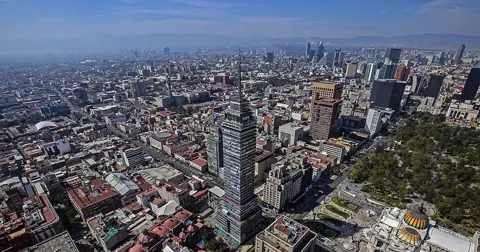
The reason those particular neighbourhoods suffered is the ground itself. Much of Mexico City is built on the sediments of the lakes that filled the valley, and that soil amplifies seismic waves and makes the shaking last longer, so an earthquake felt moderately elsewhere can be severe here. The building code divides the city into Zone I, firm hill ground; Zone II, transitional; and Zone III, the soft lake bed where amplification is greatest.
Each earthquake changed the rules. CIRES traces the city's construction code from 1920 through four major revisions driven by earthquakes: the 1957 quake introduced emergency norms and the figure of the responsible works director; the 1970s added the complementary technical norms for concrete, masonry, steel and timber design; 1985 brought a substantial strengthening of structural safety requirements and the system of co-responsible specialists; and after 2017 the city created the Instituto de Seguridad para las Construcciones to maintain and improve those standards. The code does not apply retroactively, which is why building age matters as much as building rules.
The 19 September drill that alarms visitors every year
Every 19 September, the real alert sound is broadcast deliberately as part of a national drill, and visitors who do not know this reliably think a major earthquake has begun. The national civil protection coordination announced that the Segundo Simulacro Nacional 2026 will take place on Saturday 19 September at 12:00, using five representative seismic scenarios for different regions of the country, with the official alert sound activated nationwide through radio, television, mobile phones and loudspeakers.
Earlier the same morning, at 07:19, the president raises the national flag in the Zocalo in memory of the victims of the 1985 and 2017 earthquakes. The time is not arbitrary: it is the hour of the 1985 earthquake.
If you are in Mexico City that day, expect the sound at noon, expect offices, schools, hotels and museums to evacuate to the street in an orderly way, and expect it to be over in minutes. Join in rather than staying put. Drills are also held at other times of year, and Mexico now runs more than one national drill annually, so a rehearsal outside September is not unusual either.
Green "zona de seguridad" markings and building signage
Signs and floor markings reading "zona de seguridad" mark the pre-identified safest spot inside a building, and once you can read them you will see them everywhere in Mexico City. The safe zone is the place in a structure that, given its walls, columns, floors and finishes, offers the greatest resistance and protection during shaking. It is chosen in advance by whoever prepared the building's civil protection plan, not improvised during an earthquake. Alongside them, marked evacuation routes and arrows lead to the exit and to an outdoor assembly point, the "punto de reunion".
Two words explain how these are used. Repliegue means moving to the safe zone inside the building and staying there, which the Mexico City civil protection guidance recommends for anyone on the third floor or above. Evacuacion means leaving the building for the assembly point, which is realistic only if you are near an exit and can get out within the warning time.
What to do in a hotel room, a metro car and on the street
Where you are when the alert sounds decides the right action, and none of the right actions involve running.
In a hotel room, the answer depends on your floor. Below the third floor and close to an exit, leaving for the street or the assembly point is reasonable if you can do it calmly within the warning time. On the third floor or above, move to the marked safe zone or to a structurally strong point away from windows, glass, mirrors, wardrobes and anything that can fall, and stay there. Do not use the lift; do not go out onto a balcony. Take a key and shoes if they are within reach, and nothing else.
In a Metro car, stay in it. The Metro was the first user of the alert system, and CIRES notes that the alert can stop trains automatically during the shaking. A stopped train in a tunnel is a safer place than a platform edge or a stairwell full of people, and the doors will not open onto the track. Hold on to a rail, keep away from the doors, and wait for staff instructions rather than trying to leave. Stations are staffed and evacuation is directed.
On the street, move away from what can fall on you. Buildings shed glass, facades, cornices and signage during shaking, so get clear of building fronts, power lines, poles and large trees, and stop at an open point rather than continuing to walk. If you are driving or in a taxi, the guidance echoed from CENAPRED is to pull over and stop, away from tall buildings, big trees and posts. Do not shelter in a doorway of a building you do not know.
After the shaking stops, expect aftershocks, use the phone only for urgent calls so networks stay clear, avoid fallen cables, and follow the instructions of building brigade staff, who are trained to check the structure before anyone goes back inside. The national emergency number is 911.
What the alert cannot do
The seismic alert is a genuinely valuable tool with clear limits, and knowing them prevents both panic and complacency. It cannot predict earthquakes; it detects one that has already started. It cannot help much when the epicentre is close, which is precisely the case that damaged the city in 2017. It does not cover the whole country: CIRES lists Mexico City, Puebla, Acapulco, Chilpancingo, Morelia, Oaxaca, Toluca, Colima and Cuernavaca as the cities that broadcast it, and coverage grows through agreements state by state. And it does nothing at all unless the person hearing it already knows where to move, which is the reason for the drills and the signs.
Before you settle into your accommodation
Do three things in your first hour in Mexico City. Find the safe zone markings and the evacuation route on your floor, and note whether you are above the third floor. Listen for the alert once online so you recognise it, remembering that playing the official sound in public is restricted under city rules. And if you are in the city on 19 September, put the noon drill in your calendar so that the sound of an entire capital's loudspeakers is something you expected rather than something that frightens you.