Why Waikato is dairy country
The Waikato holds more dairy herds than any other New Zealand region, which is why the farming you see from a Hamilton back road is not scenery but the country's export engine. The 2023-24 New Zealand Dairy Statistics, published jointly by LIC and DairyNZ, counts 3,022 herds in the Waikato carrying 1,075,811 cows — the largest regional share of a national herd of 4.7 million.
That last figure puts the paddocks in context. In July 2026 goods trade, Stats NZ recorded total goods exports of NZD 7.4 billion for the month, of which milk powder, butter and cheese made up NZD 1.936 billion — the single largest commodity group.
Processing is dominated by farmer-owned co-operatives. The Dairy Industry Restructuring Act 2001 allowed the two largest dairy companies to merge with the Dairy Board to form Fonterra, and as the Dairy Statistics note, Fonterra and Tatua are the two remaining dairy cattle co-operatives with established commercial arrangements for selling dairy products.
What you can actually visit
Four places near Hamilton let visitors onto working agricultural land, and none of them is a drop-in dairy farm tour. This table compares what each shows you and how access works.
| Place | What you see | Access |
|---|---|---|
| Owl Farm, Cambridge | Working demonstration dairy farm | Phone ahead; scheduled days |
| Hobbiton, Matamata | Film set on a family sheep farm | Ticketed guided tour only |
| Zealong Tea Estate, Hamilton | Organic tea plantation and processing | Booked tour or tea room |
| Mystery Creek | Agricultural events venue | Event days only |
Owl Farm is the closest thing to a genuine working dairy farm open to outsiders — a joint venture between St Peter's School Cambridge and Lincoln University. Its site describes a weekly farm walk early in the week, usually Monday or Tuesday, where you spend about 1.5 hours with the farm and demonstration managers assessing paddocks and talking through decisions. Ring first so a time can be arranged, and expect to climb over and under fences.
Owl Farm also runs four Farm Focus Days a year, open to farmers and rural professionals, and one annual Public Open Day drawing 300 to 800 people, where visitors watch milking and meet calves. Dates move, so check the site's news page rather than planning around a fixed month.
Hobbiton Movie Set Tours sits on the Alexander family sheep farm near Matamata, and the operator states plainly that the set is on private farmland and is not publicly accessible outside guided tours. The Signature Tour is listed today at 2.5 hours, NZD 130 adult and NZD 65 youth, with a family pass at NZD 332 valid for departures until 31 March 2028. You get a short bus ride through the farm rather than a farming lesson.
Zealong Tea Estate at 495 Gordonton Road is the only one of these within twenty minutes of central Hamilton. Its guided tour with tea ceremony is listed today as Saturday 9:30am, two hours, NZD 89 per person, with a shorter Saturday 2pm tasting at NZD 50. The tea room and boutique close Tuesday and Wednesday.
Fieldays at Mystery Creek
The New Zealand Agricultural Fieldays is the week when farming country opens itself to anyone with a ticket, and the Fieldays site confirms the next event runs 16-19 June 2027 at Mystery Creek, Hamilton. Hours listed are 8:00am to 5:00pm Wednesday, Thursday and Friday, and 8:00am to 4:00pm for Super Saturday.
It is a trade event the public is welcome at, not a country fair. The organiser describes over 1,100 exhibitors spanning dairy, meat and wool, forestry, horticulture, seafood, arable, agritech and heavy machinery, and reported more than 132,000 people through the gates in 2026.
Ticket prices listed on the Fieldays FAQ page today are NZD 36 online or NZD 42 at the gate for a one-day adult, NZD 18 for children 5-14, free for under-fives, NZD 120 online for a four-day adult pass and NZD 108 online for a one-day family pass, plus an online transaction fee. Confirm these on the official ticket page before you buy, since pricing is set per event.
Mystery Creek Events Centre is a 114-hectare venue about 15 minutes from Hamilton's CBD and two minutes from Hamilton Airport, and it runs public expos, festivals and trade shows through the rest of the year. If your dates miss June, check the venue's What's On listing.
Biosecurity rules on farms
New Zealand farms treat visitors as a disease pathway, which is why a friendly-looking gate is still a closed door. DairyNZ's visitor biosecurity guidance tells farmers to sign the entrance so visitors contact them before entering, to keep visitors out of high-risk areas such as calf pens, and to control which vehicles use farm races.
The cleaning standard is specific and worth knowing before you turn up in walking boots. DairyNZ's guidance is to remove all visible dirt and muck when washing boots, paying particular attention to the soles, because disinfectant does not work on dirty boots — then spray disinfectant generously, and clean again on the way out.
That routine will feel familiar if you flew in recently. The New Zealand Traveller Declaration asks every arriving traveller about used outdoor equipment alongside food and animal or plant products, because the same soil on the same boots is what border officers inspect at the airport. Pack footwear you are willing to scrub, and be honest about it at the border.
When a farm visit is interesting
Timing changes what a Waikato dairy farm shows you, because the industry runs on one seasonal cycle rather than year-round production. The Dairy Statistics report records a median North Island calving date of between 3 and 16 August in the 2023-24 season, which makes late winter and early spring the period when calves are on the ground and the farm is busiest.
The same report shows Waikato per-cow production peaking in September and October, so a visit in that window puts you on a farm at full stretch — which is exactly when farmers have least time for visitors, and why booked open days matter.
- August to October is the richest window: calving, peak milk and green pasture, but also the busiest for farm staff.
- November to February gives settled weather and long evenings, with cows still milking but the drama over.
- March to May is the tail of the season, production falling away and cows being dried off.
- June is quiet on farm, wettest underfoot, and the month Fieldays fills Mystery Creek.
Milking times set the shape of a farm day. DairyNZ notes that traditional twice-a-day milking intervals in New Zealand have been 10 to 14 hours, which is why farm walks and open days cluster around the middle of the day.
Getting there without a car
Most of the Waikato farm options need a car, and it is fairer to say so than to pretend otherwise. Owl Farm sits off Cambridge Road at St Peter's School Cambridge, Zealong is on Gordonton Road north of Hamilton, and Mystery Creek is near the airport — none is on a frequent city bus route.
Two exceptions are real. Hobbiton's directions page states that InterCity runs multiple daily bus services between Hamilton and Matamata, arriving outside the Matamata Information Centre, which is one of the two places tours check in from. And Fieldays runs its own free bus network from central Hamilton for the four event days.
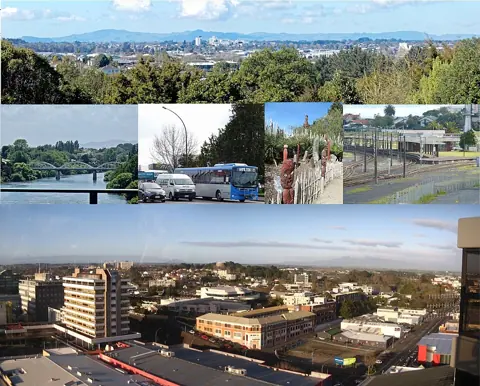
The Waikato River runs through all of this. Te Awa River Ride is a wheelchair-accessible, pram-friendly walking and cycling route along the river from the city centre to Hamilton Gardens, and it is the cheapest way to read the landscape: pasture, willow, stopbanks and water.
Before you book a farm day
Pick one anchor and build the day around it, because these places are scattered across three towns. Fieldays in June, Owl Farm's open day if the date lands, or a Hobbiton and Matamata day are three separate trips rather than one.
What this guide does not cover: farm stays and working holidays, which are a different arrangement with different rules; agritourism further afield in Rotorua or Waitomo; and the regulated sale of raw milk, which has registration requirements to check with the regulator rather than at a roadside stall.