Norway's economy rests on three resources that have little to do with each other except that all three come from Norwegian nature and all three were exploited unusually carefully compared to how other countries have handled similar windfalls: North Sea oil and gas, farmed salmon, and hydroelectric power generated by the country's mountains and rainfall. Only one of the three has a dedicated, visitor-ready site built to explain it.
Oil: the resource that built the modern state
Norway began producing oil from the North Sea in the early 1970s, following the discovery of the Ekofisk field, and structured the resulting revenue through state ownership stakes, a dedicated tax regime, and — starting in the 1990s — a sovereign wealth fund that invests the surplus abroad rather than spending it directly into the domestic economy each year. That fund, formally Statens pensjonsfond utland, has grown into one of the largest of its kind globally and underwrites a significant share of the country's long-term public spending, though it functions as a fiscal buffer rather than a source of direct payouts to citizens — part of why everyday Norwegian prices stay high regardless of the country's oil wealth.
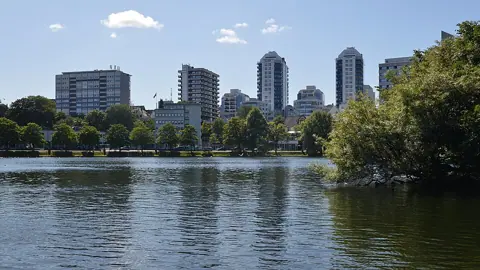
Stavanger, on Norway's southwestern coast, became the operational heart of this industry because of its proximity to the North Sea fields and its existing shipping and engineering base, and the city still functions as a major hub for oil and gas companies and their supply chains today.
That concentration of expertise is visible around the city beyond the museum itself — a dense cluster of engineering firms, offshore-service companies and university research groups tied to petroleum and, increasingly, to offshore wind and other energy transition work, giving Stavanger a genuinely different economic character from the rest of Norway's more tourism- or fishing-oriented coastal towns.
The Norwegian Petroleum Museum: the actual visitable site
The Norwegian Petroleum Museum (Norsk Oljemuseum) sits on Kjeringholmen in Stavanger's harbor, in a building designed to evoke the industry's own architecture — concrete platform legs and steel decking among its structural references. According to the museum's own site, adult admission is 180 NOK, with reduced rates for children, students and seniors and a family package for two adults and three children at 420 NOK. Opening hours run Monday to Saturday 10:00–16:00 and Sunday 10:00–18:00 from September through May, and daily 10:00–19:00 from June through August, with closures on a handful of specific dates including Christmas and New Year's Day.
The museum's exhibitions cover the industry's technology and history directly, including a current exhibition on the history of energy and climate change, an industrial heritage program tracing early offshore platforms, and documentation connected to the 1980 Alexander L. Kielland platform accident, one of the industry's worst disasters. This is a genuinely substantial museum built around the subject rather than a branded gift shop with a few display cases, and it is the clearest way for a visitor to understand the physical scale and engineering of an industry that otherwise operates entirely offshore, out of public view.
Salmon: a resource visible mostly as product, not process
Norway is one of the world's largest producers of farmed Atlantic salmon, raised in coastal and fjord-based sea pens across the country's long, sheltered coastline — conditions well suited to the species and to large-scale aquaculture. Unlike the oil industry, salmon farming does not have a comparable flagship visitor museum that could be confirmed here, and individual farms are working commercial operations rather than facilities built for tourism. Some regions offer organized tours or visitor centers tied to specific aquaculture companies, particularly in areas that already draw fjord tourism, but this guide could not confirm a specific, currently operating public tour to recommend with confidence.
If seeing salmon farming up close matters to your trip, the more reliable approach is checking with a specific region's tourist office — several fjord areas advertise aquaculture-related excursions seasonally — rather than assuming any pen you spot from a ferry or road is open to visitors.
Hydropower: the quiet one, running underneath everything else
Norway generates the large majority of its electricity from hydropower, drawing on its mountainous terrain and high rainfall to run turbines fed by dammed rivers and lakes across the country. This resource is arguably as important to daily Norwegian life as oil — it underwrites cheap, largely renewable domestic electricity and, by extension, energy-intensive industries like aluminum smelting — but it is the least visible of the three resources to a visitor, since most hydropower infrastructure sits inside working dams and tunnels rather than public-facing exhibits. This guide did not find a specific, currently operating hydropower visitor center to confirm and recommend, and will not imply one exists where it could not verify it.
What actually connects the three
Oil funded the state, salmon built an export industry that reaches supermarkets worldwide, and hydropower kept domestic electricity cheap enough to support other energy-intensive industry — together they explain a small, geographically remote country punching well above its population in per-capita wealth. Only the first has a museum built specifically to walk a visitor through it in person; the other two remain, for a traveler, something closer to background fact than a scheduled stop on an itinerary.
What this guide does not cover
This article does not cover current Norwegian energy policy debates, the ongoing discussion within Norway about oil's future role in the economy, or specific commercial salmon-farm tour bookings, all of which change more quickly than a general explainer can responsibly track.