Why does Panama City have two old towns?
The name misleads. Casco Viejo, the "old quarter" most visitors mean, is the replacement city. The genuinely older one is Panamá Viejo, which UNESCO describes as the oldest European settlement on the Pacific coast of the Americas.
Pedrarias Dávila founded it on 15 August 1519, according to the Patronato Panamá Viejo, which manages the site. The land was not empty: the Patronato's museum traces about 1,500 years of earlier occupation by fishing and farming communities. For 152 years the Spanish city was a base for expeditions and a link on the trade routes that carried silver across the isthmus, and UNESCO notes it also lived through a slave rebellion, fire and an earthquake.
In 1671 Henry Morgan's forces attacked and the city was left in ruins. The Municipality of Panama dates the formal transfer of residents, churches and government to 21 January 1673. The new site, UNESCO says, was a small peninsula at the foot of Ancón hill, chosen for defence and ringed with walls.
The move also cannibalised the old city. The Patronato records that the ruined La Merced church served as a quarry: its façade was dismantled and rebuilt in the new church, where it still stands, and the rest of its walls went into the new city's fortifications. Part of Panamá Viejo is, quite literally, in Casco Viejo.
One World Heritage site, two very different visits
UNESCO first listed the Historic District of Panamá, with the Salón Bolívar, in 1997. In 2003 the World Heritage Committee added Panamá Viejo under the same criteria and renamed the property. Both towns are also protected nationally under Ley 91 of 1976, which the Ministry of Culture cites for Casco Antiguo, Panamá Viejo and Portobelo.
| Panamá Viejo | Casco Viejo (Casco Antiguo) | |
|---|---|---|
| Dates from | 1519 | 1673 |
| Today | Ruins in an archaeological park | Inhabited district of houses, churches, offices, hotels |
| Run by | Patronato Panamá Viejo | Oficina del Casco Antiguo, Ministry of Culture |
| Entry | US$17 foreign adult | Streets free; museums charge |
| Closed | Mondays | Neighbourhood always open; key museum closed Mondays |
| Time the managers suggest | About 90 minutes to 2 hours | Not stated; described as walkable |
The management models differ. The Patronato calls itself a private, autonomous, non-profit organisation of public interest, with a board that includes the Kiwanis Club, the Ministry of Culture, the Tourism Authority, the mayor's office and the Chamber of Commerce. Casco Antiguo is handled by the Oficina del Casco Antiguo, part of the Ministry of Culture, working in a district where people live and do business.
What each town lets you see
Panamá Viejo: a city plan without a city
The Patronato puts the surviving archaeological site at 28 hectares of the original 60. What remains is a street grid, the shells of convents, the Casas Reales that housed royal government, the Puente del Rey stone bridge built between 1619 and 1634, and the cathedral tower of 1619 to 1626. The Ministry of Culture's heritage register calls that tower one of the principal national symbols. It is now a viewpoint reached by 115 steps in three stages.
The Tourism Authority frames the tower as the city's original skyscraper, with today's skyline visible from the top, and mentions an artisan market on site. The Patronato's FAQ says an internal shuttle runs from the Visitor Centre to the Convento de la Concepción, the Plaza Mayor museum and the Convento de Santo Domingo. The museum holds more than 350 pieces.
Casco Viejo: the walled town that kept growing
UNESCO notes that Casco Viejo also keeps its original street plan, and that most of its seaward walls and parts of the landward bastions and moat survive. Its buildings span the 17th to the 20th centuries in Spanish, French and early American styles. The Tourism Authority points to the Paseo Esteban Huertas promenade, built on the wall that once guarded the city against pirates.
The Municipality's account of the 1673 plan explains a pattern still visible on the map. The walled city, intramuros, was reserved for the better-off, while poorer residents settled in the arrabales outside, such as Santa Ana. The Ministry of Culture's protected area today spans three corregimientos: San Felipe, Santa Ana and El Chorrillo.
Buildings carry later layers of history too. The Salón Bolívar is where, UNESCO notes, Simón Bolívar attempted a continental congress in 1826. On Plaza de la Independencia, the Museo del Canal Interoceánico occupies a former Grand Hotel that became offices of the French canal company.
What UNESCO has flagged
The listing comes with scrutiny. UNESCO's 2019 state of conservation review listed severe deterioration of historic buildings, demolitions, the visual impact of a maritime viaduct, housing and the forced displacement of occupants. The Committee regretted that a Hotel Casco Viejo project was well advanced without a heritage impact assessment. It also found that green screens around Panamá Viejo could not fully offset the impact of nearby developments.
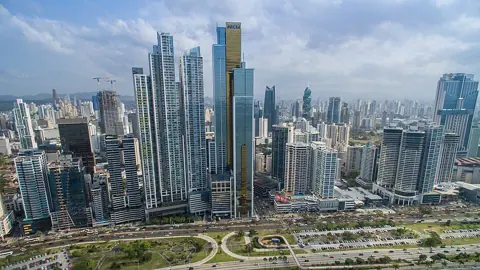
In 2023 the Committee asked Panama to report on every planned, ongoing or recently finished construction project and on both components' condition. For visitors, this explains two things you will notice: high-rises framing the ruins, and an ongoing debate in Casco Viejo over restoration, hotels and who gets to keep living there.
Which should you visit?
If you have half a day and want the origin story, go to Panamá Viejo. For a foreign adult, the ticket is US$17. Allow the Patronato's suggested two hours and arrive well before the 16:30 ticket office closing. Wear shoes for earth and limestone paths.
If you have an evening, or want architecture, restaurants and museums in one walkable area, choose Casco Viejo. Its streets cost nothing to walk. The Tourism Authority notes parking inside is scarce, with free parking at Cinta Costera 3, and lists taxis, ride-hailing and the MiBus C982 route.
If you do both, visit Panamá Viejo first so Casco Viejo reads as its sequel. The Tourism Authority puts Panamá Viejo about ten minutes' drive or 30 minutes by bus from the centre. Two foreign adults adding the canal museum at US$15 each would pay US$34 at Panamá Viejo and US$30 at the museum, or US$64 in total. The Patronato's FAQ does not give the age range for its US$5 foreign child ticket, so ask at the window.
If your trip also includes the working canal, compare the locks in our Miraflores or Agua Clara guide.