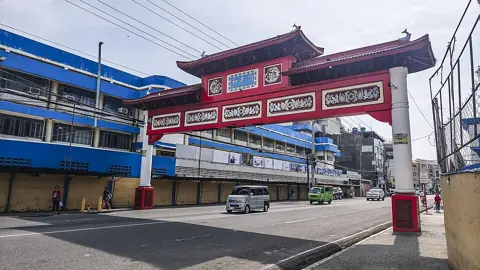
Davao is not a small town. It is the Philippines' third-largest city by population and a highly urbanised city in its own right, with 182 barangays and an airport handling 4.5 million passengers. It still runs on different premises from Manila, and that is the point.
How different is the scale, actually?
Davao is larger in land and smaller in people, which produces a city that feels spread out rather than dense.
| Measure | Metro Manila | Davao City |
|---|---|---|
| Population, 2024 census | 14,001,751 | 1,848,947 |
| Land area | 619.54 km² | 2,440 km² per the city's own plan |
| Barangays | — | 182 |
| Airport passengers, 2025 | separate operator | 4,513,682 |
The airport figure is worth holding onto: Davao handled about 18 per cent of all passenger movements across airports run by the civil aviation authority in 2025, with Cebu Pacific alone carrying 2,454,933 domestic passengers there.
Does ride-hailing work outside the capital?
In 23 places, and Davao is one of them. Grab publishes its own Philippine list, and it is short enough to read in full: Bacolod, Baguio, Balanga, Batangas City, Binalonan, Cagayan de Oro, Cebu, Dagupan, Davao City, Dumaguete, General Santos, Iligan, Iloilo, Koronadal, Legazpi, Lipa, Manila, Naga, Olongapo, Pampanga, Tacloban, Tagum and Tarlac.
That list is not a sample. It is the footprint, and anywhere absent from it has no Grab.
What fills the gap elsewhere is regulated differently from anything in Manila. Tricycle franchising is devolved to local governments — the transport regulator's authority over them passed to local government units in 1994, while vehicle registration stayed national. And motorcycle taxis sit on contested legal ground: the transport department's own order states that motorcycles "are likewise not allowed as public transport conveyance," and the Supreme Court in March 2019 annulled the injunction that had been protecting one operator.
What about money?
Thinner than the capital, and officially measured. As of the fourth quarter of 2023, the central bank recorded 254 cities and municipalities — 15.5 per cent of all — with no banking presence. Of those, 192 had some other access point available and 62 had none whatsoever.
| Indicator, Q4 2023 | Figure |
|---|---|
| Municipalities with no banking presence | 254 (15.5%) |
| Of which, with no access point at all | 62 (3.8%) |
| Off-site ATMs | 13,307 |
| On-site ATMs | 12,774 |
| Total access points | 222,565 — 27.91 per 10,000 adults |
Davao City itself is not one of those places; a highly urbanised city has banks. The relevance is for the trip beyond it — the beach town, the island, the mountain municipality — where the last reliable ATM may be in the city you flew into.
Which local rules will you actually meet?
Davao's are the strictest in the country and the best documented, which makes them a useful worst case.
| Rule | Detail |
|---|---|
| Liquor sale ban | 1:00 a.m. to 8:00 a.m. |
| On-premises consumption ban | 1:00 a.m. to 2:00 p.m. |
| Last call | 12:00 midnight, consumed by 1:00 a.m. |
| Smoking or vaping in a prohibited area | PHP 3,000 plus mandatory cessation counselling |
| Failure to present valid ID when asked | PHP 1,000 |
| Selling tobacco or alcohol to a minor | PHP 5,000, up to one year, permit revocation |
Read the first two rows together. The Comprehensive Liquor Code of Davao City, enacted 7 May 2024, bans sale from 1:00 a.m. to 8:00 a.m. but bans consumption inside a commercial establishment from 1:00 a.m. until 2:00 p.m. — an asymmetry that catches visitors who assume the two windows match.
The smoking ordinance is equally specific. Smoking and vaping are unlawful in public conveyances, government vehicles, accommodation and entertainment establishments, workplaces, enclosed and partially enclosed public places, public outdoor spaces, places of worship, food preparation areas, health facilities and within 100 metres of schools and playgrounds — except in a designated area no larger than five square metres, one per building, with minors barred.
Speed limits are also set locally. Davao's 2023 ordinance runs 80 km/h for light vehicles on the named open roads, 60 on the coastal road and main crossings, 40 on through streets, 30 on city and interior roads, 20 on subdivision and barangay roads, and 20 for all vehicles in school zones — enforced with speed guns and cameras.
What about connectivity?
The regional gap is the largest of any measure here. The 2024 national ICT household survey found 48.8 per cent of Philippine households with internet at home, up from 17.7 per cent in 2019 — but the spread by region is 47.5 percentage points wide.
Metro Manila stands at 68.7 per cent and Central Luzon at 61.3, against BARMM at 27.7 and Zamboanga Peninsula at 21.2 per cent. Nationally, 58.8 per cent of connections are fixed wired broadband and 39.3 per cent mobile.
So what actually changes?
Four things, in the order you will notice them: the ride-hailing app may not cover your destination; the local ordinances are stricter and enforced; banking thins out the further you go from a city; and the internet gets slower and less reliable.
What does not change is more interesting. Card acceptance, English, domestic flight frequency and the basic shape of the retail economy are much the same in Davao as in Manila. The provincial discount is in prices and pace, not in infrastructure.
What this guide does not cover
Several rules could not be confirmed and are absent rather than guessed. The current status of the motorcycle-taxi pilot programme, its authorised cities and whether Davao is among them are unverified: the transport regulator's site returns errors on every attempt.
There is no current list of cities where ride-hailing is formally authorised, and no fleet cap newer than 2018, when the regulator set 65,000 units for Metro Manila, 1,500 for Metro Cebu and 250 for Pampanga. Whether those figures still stand is unknown.
No curfew hour is stated for Davao City. The last official instrument found expressly lifted the curfew and expired on 30 June 2022, and no replacement could be located — so if you encounter one locally, it is not from a source we could verify.
Finally, no regional breakdown of banks or ATMs appears here, because the central bank's dashboard publishes national aggregates only, and no household internet figure for the Davao Region is given, because the statistics release names only the highest and lowest regions.