How paying differs between the two systems
Bangkok's elevated BTS Skytrain and underground MRT are run by different companies, and each sells its own tickets. The BTS lists three: a single journey card, a One-Day Pass and the Rabbit card. The MRT, run by Bangkok Expressway and Metro (BEM), uses a single journey token and EMV cards.
So a trip that uses both means paying twice, once inside each set of gates. The busiest change is between MRT Sukhumvit and BTS Asok: BEM's station page says Exit 3 of MRT Sukhumvit leads to Asok BTS Station, along with Terminal 21.
| System | Tap a bank card | Cash | Other |
|---|---|---|---|
| MRT Blue and Purple | Credit card: Visa, Mastercard, UnionPay | Token from machine or office | MRT EMV prepaid card (app sign-up) |
| BTS Skytrain | Not mentioned on BTS pages read | Coins at the machine | QR (WeChat, Alipay, Thai banking app), Rabbit card, One-Day Pass |
MRT: tapping a credit card
BEM's EMV page says EMV contactless cards can pay fares on the MRT Blue Line and Purple Line. It accepts credit cards from every Thai and every international issuer under Visa, Mastercard or UnionPay; debit cards are accepted only from Thai bank issuers. The page does not say whether phone or watch wallets work, so have the physical card ready.
The page does not publish a fare difference between card and token, a daily cap, or any foreign transaction charge. Your own bank may add a fee for a baht payment, so ask it before relying on the card for every ride.
BEM also sells its own prepaid MRT EMV card, registered in the Bangkok MRT app. Sign-up asks for a national ID card or passport, a face check and an SMS code to your mobile number, so for a short stay your own credit card is the simpler route.
MRT: buying a token with cash
The ticket vending machines sell only the adult single journey token. According to BEM's how to get a ticket page, they accept 1, 5 and 10 baht coins and 20, 50 and 100 baht notes, and give change in coins only. Purple Line machines can issue up to 10 tokens in one go. The ticket office near the gates sells tokens too, and is where to ask for any non-adult fare.
You tap the token on the top of the entry gate and drop it into the slot at the exit gate, which keeps it.
BTS: machines, QR and the One-Day Pass
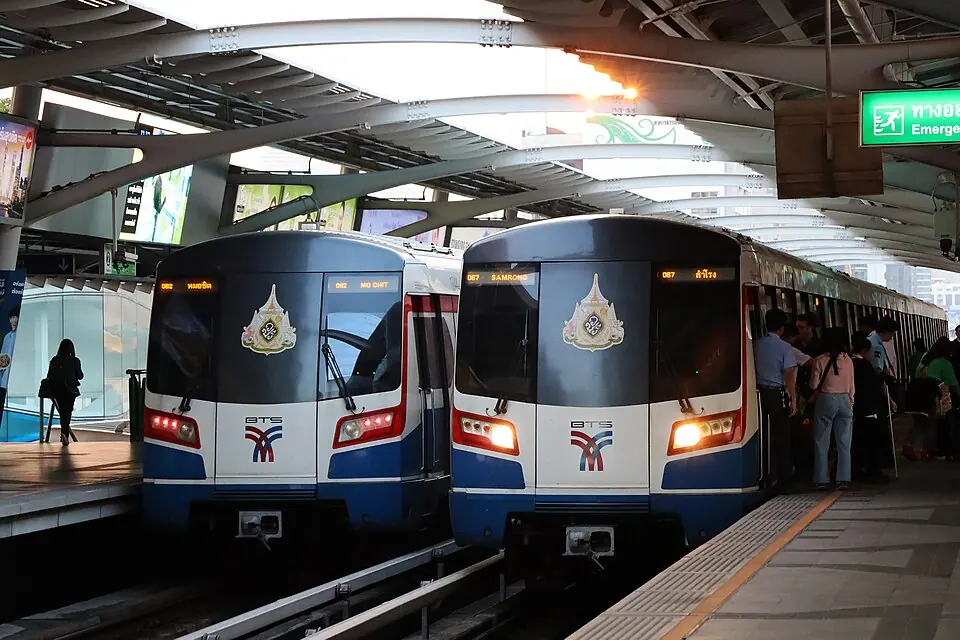
At BTS ticket machines you pick your destination station on the screen, then pay. BTS's how to buy tickets page mentions inserting coins, or scanning a QR code with WeChat, Alipay or any mobile banking app. It does not mention banknotes at the machine, so keep coins or use a ticket office. One purchase gives up to 4 cards.
The same page says the One-Day Pass is sold at any BTS ticket office. The BTS pass page did not display its price or conditions on 12 October 2026, so ask at the office and compare it with the fares on your planned rides before buying.
The BTS pages we read do not mention tapping a bank card at BTS gates. Until BTS publishes that, plan on coins, QR, a Rabbit card or the pass.
BTS: is the Rabbit card worth it?
BTS's Rabbit card page gives the costs: a 120-baht issuance fee, no deposit, top-ups from 100 baht up to a stored maximum of 4,000 baht. You can top up at any BTS ticket office, at MRT Yellow Line, MRT Pink Line and BRT ticket offices, and at ticket machines in every BTS station. Rabbit says the fare is deducted when you exit at your destination, and any trips loaded on the card are used before stored value.
The 120 baht is a fee, not a deposit, so treat it as spent. What you buy with it is skipping the machine: tap in, tap out, top up when low.
Example: a three-day visitor
Take one adult staying near Asok for three days with a contactless Visa credit card, who expects about three BTS rides and two MRT rides a day.
- MRT rides: tap the Visa card. Nothing to buy in advance, no coins needed, one card for the whole stay.
- BTS rides, pay as you go: about nine machine purchases, each needing coins or a QR payment. Nothing is left over at the end.
- BTS rides, Rabbit card: 120 baht fee plus at least 100 baht first top-up, so 220 baht in cash up front before any fare. After that, no queue at the machine.
- BTS, one heavy day: if one day has many Skytrain rides, ask at the office about the One-Day Pass and compare.
Because the fare tables did not load, we cannot show which option is cheaper per ride. The decision rests on convenience: the Rabbit card suits someone riding the BTS several times a day who dislikes hunting for coins and has no Chinese or Thai QR wallet. Pay as you go suits someone with a QR wallet or a handful of BTS trips.
Hours, and when to take something else
BTS lists service hours of 05:00 to 01:00. The last train from Siam to all stations leaves at 00:02; the last towards Samrong, Ha Yaek Lat Phrao, Bang Wa and National Stadium leaves at 00:15. After that, it is a taxi or ride-hail.
Siam is the only station where the Sukhumvit and Silom lines meet, according to BTS's network page, so you change there without leaving the gates. The Sukhumvit line also runs past Chatuchak Park, useful for the Chatuchak Weekend Market.
For the riverside temples, a boat often beats the trains; see Chao Phraya river boats. If you are arriving by air, the payment you choose here affects the first ride: see Suvarnabhumi to the city or Don Mueang to the city.

