Iceland's economy runs on three pillars that have little in common except that all three trace back to the same unusual geography: a volcanic landscape that provides cheap, abundant energy, and an island location surrounded by some of the world's richest fishing grounds.
Geothermal and hydro power: the foundation under everything else
Iceland generates the overwhelming majority of its electricity from renewable sources, split between hydropower (harnessing the country's rivers and glacial meltwater) and geothermal power (drawing on the same volcanic heat that produces the sulphur smell in Icelandic hot water). This isn't just an environmental talking point — it's the specific reason several other Icelandic industries exist in their current form, since cheap, reliable electricity is the input that makes energy-intensive industries like aluminium smelting viable in a country with no significant fossil fuel reserves of its own.
The geothermal exhibition at Hellisheiði, roughly 25 kilometers east of Reykjavík and run by the power company ON Power (Orka náttúrunnar), is the clearest visitor-facing way to understand how this works. According to the operator's own site, the exhibition covers how the geothermal plant produces power, includes an audio guide and a multisensory space called Agndofa built around the local landscape, and is open daily: 9:00 AM to 5:00 PM from April through October, and 9:00 AM to 4:00 PM from November through March. A café, gift shop and guided group tours are also available on site, according to the operator.
Fishing: historically dominant, still significant
Fishing was, for most of Iceland's modern economic history, the country's single most important industry, underpinning its early 20th-century development and remaining central to national identity well beyond its current relative share of the economy. Iceland's position in the North Atlantic gives it access to exceptionally rich fishing grounds, and disputes over fishing rights and territorial waters — including the mid-20th-century "Cod Wars" with the United Kingdom over exclusive fishing zones — shaped the country's international relations directly. Fishing remains economically significant today, though tourism and other sectors have grown to represent a larger relative share of the economy than in past decades.
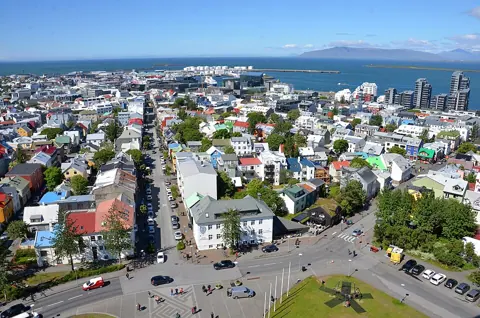
That shift shows up visibly in Reykjavík's own harbor area, where working fishing infrastructure now sits alongside restaurants, tour-boat operators and the maritime museum itself — a genuine mixed-use waterfront rather than either a purely industrial dock or a purely tourist-facing one.
The Reykjavík Maritime Museum, situated in the city's harbor area, covers this history, including exhibits related to fishing vessels, coastal life and Iceland's relationship with the sea. This guide could not independently confirm the museum's current opening hours, admission price or exact current exhibition content from an official source accessed during research, so check directly with the museum before planning a visit around it.
Aluminium: cheap power made an unlikely industry possible
Iceland has no bauxite (the ore aluminium is refined from) of its own, yet it hosts several large aluminium smelters, run by international companies that import semi-refined alumina and smelt it into finished aluminium domestically. The reason is straightforward: smelting aluminium requires enormous, continuous amounts of electricity, and Iceland's hydro and geothermal power is cheap and reliable enough to make importing raw material and exporting finished metal an economically viable business model, despite the distances involved. This has made Iceland, on a per-capita basis, one of the world's larger aluminium producers, entirely on the strength of its energy resources rather than any domestic mineral deposit.
This guide could not confirm a currently operating public tour of an active Icelandic aluminium smelter from an official source. Smelters are large industrial facilities generally not built with casual visitor access in mind, and this guide will not imply a tour exists where it could not verify one — if this specifically interests you, contacting a smelter operator directly for any current visitor program is the honest next step rather than assuming a walk-up tour is available.
How the three pieces fit together
Geothermal and hydro power don't just heat homes and pools — they are the specific economic input that makes energy-intensive industry like aluminium smelting profitable in a country otherwise short on the fossil fuels or heavy industry base that might normally support such a sector. Fishing remains a genuine pillar in its own right, tracing a longer and more visible history than the power-and-metal relationship. Tourism, not covered in detail here, has grown to become a major fourth pillar of the modern Icelandic economy, benefiting in turn from the same volcanic landscape that produces the geothermal power described above.
What this guide does not cover
This article does not cover Iceland's tourism industry in detail, current specific export figures for any of the three sectors described, or ongoing debates within Iceland about the environmental trade-offs of further geothermal or hydro development, all of which are better covered by dedicated economic or environmental reporting closer to your visit.