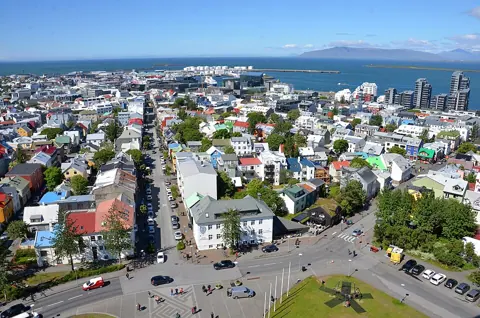
Two things surprise a lot of first-time visitors to Iceland within their first day: the hot water sometimes smells faintly of rotten eggs, and the public swimming pool has a shower rule that gets enforced more seriously than almost any other public etiquette rule in the country. Both come from the same underlying fact about Iceland — nearly all of its heat and hot water comes directly from the ground.
Why the hot water smells
Iceland sits on a geologically active volcanic zone, and geothermal energy accounts for over 60% of Iceland's primary energy consumption, mainly for hot water and heating, according to Orkustofnun, Iceland's National Energy Authority — the same power source that underwrites much of Iceland's economy — drawn from underground sources warmed by volcanic activity rather than heated electrically or by burning fuel. That geothermal water frequently carries dissolved hydrogen sulphide and other minerals picked up from the volcanic rock it passes through, producing the faint sulphur-like smell many visitors notice when they run a hot tap, take a shower, or step into a geothermally heated pool.
Cold tap water in Iceland typically comes from a separate, unheated groundwater source and generally does not carry the same characteristic smell — so if you notice the smell mainly on hot water and not cold, that's consistent with how the two supplies are generally sourced. The smell itself is a normal feature of geothermal water rather than a sign that something is wrong, though if you have specific health concerns about water quality, official Icelandic health and water-authority sources are the appropriate place to check current guidance rather than general travel information.
The sundlaug: more than a swimming pool
Public swimming pools (sundlaugar) function as a genuine daily social institution in Iceland, closer in role to a neighborhood café or pub in other countries than to a typical municipal swimming pool abroad. Icelanders of all ages visit regularly, sometimes daily, and pools are frequently the site of real, ongoing conversation among regulars rather than simply lap swimming. Most pools combine a main swimming pool, heated by the same geothermal supply, with a set of smaller hot tubs (heitir pottar, or "hot pots") at varying temperatures, and it's often the hot pots rather than the main pool where the actual socializing happens.
Many pools also include a cold plunge tub and a steam room alongside the hot pots, and moving between the different temperature options over the course of a visit is a normal, expected pattern rather than picking one pool or tub and staying there for the whole session.
The pre-swim shower rule, and why it's taken seriously
Reykjavík's own municipal pool rules state that "all swimmers are required to shower thoroughly without swimwear before entering the pool" — not a quick rinse, but genuinely washing with soap, with signage in changing rooms typically indicating specific areas (feet, armpits, groin) that need particular attention. This rule exists because Icelandic pools generally use less chemical treatment than pools in many other countries rely on, making the pre-swim wash a more direct substitute for water treatment rather than an old-fashioned formality — the shared water quality genuinely depends on everyone actually doing it.
This is one of the more consistently, visibly enforced pieces of etiquette a visitor will encounter in Iceland. Staff at some pools have been known to actively remind or check on visitors who skip the shower, and skipping it is treated as a real breach of a shared-facility rule, not a minor faux pas.
What else to expect at a sundlaug
Changing rooms are typically communal and single-gender, with nudity in the shower and changing area treated as unremarkable and expected rather than awkward. Towels and swimwear rental are usually available at most pools for a fee if you haven't brought your own, and lockers generally require either a small coin deposit or a wristband key rather than a padlock you bring yourself — check the specific system at whichever pool you visit, since it varies by location.
Distinguishing pools from natural hot springs
Public swimming pools are municipal facilities within towns and cities, distinct from natural geothermal hot springs and lagoons found across the countryside (the Blue Lagoon being the best known of the latter, though far from the only one). Both draw on the same underlying geothermal geology, but they are different kinds of destinations with different etiquette norms — natural hot springs vary considerably in facilities and rules by location, and checking site-specific guidance for a particular natural spring before visiting is worth doing separately from general pool etiquette.
What this guide does not cover
This article covers the origin of geothermal water's smell and standard sundlaug etiquette; it does not cover specific pool locations, admission prices, or natural hot spring safety guidance, all of which are better checked directly with the specific facility or Iceland's official safety resources before you go.