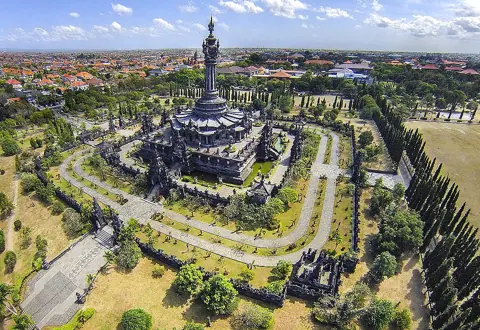
Compare the performance rather than the marketing photograph
The Indonesian tourism ministry’s Kecak guide describes a chorus of men supplying the rhythmic sound instead of a gamelan orchestra. The story draws on Rama, Sita, Ravana and Hanuman. You do not need prior knowledge of the epic, but reading a short synopsis helps distinguish the characters once the action begins.
The ministry’s Barong and kris-dance explanation focuses on Barong and Rangda and the tension between opposing forces. Barong’s animal-like appearance is one recognisable feature; it is not simply another name for Kecak’s monkey characters.
| Your main interest | A useful starting choice |
|---|---|
| Layered human voices and ensemble rhythm | Kecak |
| Masked figures and character movement | Barong |
| A particular temple or outdoor setting | Compare productions at that actual venue |
| A relaxed evening with limited travel | Start with performances near your accommodation |
Understand the cultural context without inventing antiquity
The Kecak guide describes the theatrical form as developing through a 1930 collaboration between Wayan Limbak and Walter Spies, drawing on the Sanghyang tradition. It should not be presented as an unchanged ancient ceremony merely because a performance looks unfamiliar to a visitor.
Likewise, a ticketed Barong production needs to be understood through its own programme. Ask what the advertised show includes and whether other dance forms are part of the evening. A short visitor performance cannot stand for every religious or community use of a tradition.
Choose a venue you can reach comfortably
Kecak is associated with Uluwatu, but the ministry also names venues in Ubud and elsewhere in Bali. That gives you a useful choice if your schedule does not fit a long journey to a particular cliffside setting.
Denpasar, Ubud and Uluwatu are different locations. Compare transport from your actual accommodation and agree how you will return after the show. Avoid planning a tight dinner reservation or airport connection around an unverified journey estimate.
Check the ticket in four steps
- Match the date, venue and performance name with the seller’s confirmation.
- Ask whether the price covers only the show or any other site admission.
- Check seating, entry procedure and the instructions for arriving before the performance.
- Read the weather, cancellation and refund conditions for that production.
An outdoor setting may be a major reason to choose a show. It also makes the operator’s weather arrangements relevant. Do not turn a photograph of a sunset into a promise about your seat, the sky or the timing of the dramatic finale.
Prepare to follow the story
Read the synopsis before taking your seat, then put the phone away enough to watch the performers. Check photography rules and avoid blocking the view of people behind you. If sound levels or intense scenes are a concern for someone in your group, ask the organiser what the production involves.
For a performance inside a religious complex, review Bali temple dress and sarong rules. For the wider cultural setting, learn how to move respectfully around canang sari offerings.