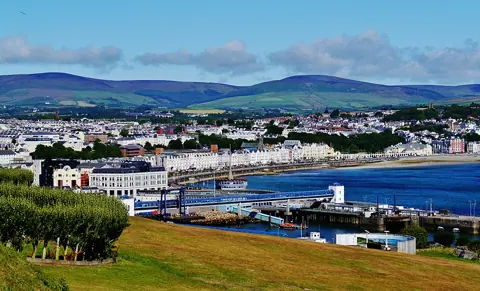
Getting to the Isle of Man means a ferry or a flight — there's no tunnel, bridge, or rail link to the mainland. Once you're there, three genuinely old railway lines, plus one of the last working horse tramways anywhere, form a transport network that's part heritage attraction and part real way of getting around, and it helps to know which is which before you plan a day around one.
Arriving by sea
The Isle of Man Steam Packet Company operates the island's ferry services, connecting Douglas with Heysham and Liverpool in England and with Larne in Northern Ireland. Heysham is the most direct UK mainland link and typically the most frequent; Liverpool and Larne fill out the network with less frequent seasonal service. The company publishes its own performance data — for the twelve months to August 2026, it reported 78% of sailings departing on time (within fifteen minutes) and a 95% overall sailing-reliability rate, figures worth checking again close to your travel dates since they shift over time and specific routes.
Arriving by air
Isle of Man Airport, near Castletown in the island's south, connects to a range of UK and Ireland airports through several carriers rather than a single dominant one. Flight time from most UK regional airports is short — often well under an hour — which makes flying a practical option for a shorter trip where the ferry's longer crossing time matters less.
The Steam Railway: heritage line, working transport
The Isle of Man Steam Railway runs steam-hauled trains through the island's south, connecting Douglas with Castletown and Port Erin along a route that has operated, in one form or another, since the Victorian era. It runs on a published seasonal timetable rather than year-round daily service, and while it's built and marketed as a heritage attraction, it functions as genuine point-to-point transport along its route for the season it operates.
The Manx Electric Railway: around 130 years old, still running
The Manx Electric Railway runs along the island's east coast, and the operator itself describes it as "a 130 year old electric railway" — meaning this is one of the oldest electric railways still operating anywhere, not a modern line dressed up as old. Like the Steam Railway, it runs a seasonal timetable and covers a specific route rather than the whole island.
The Douglas horse trams: one of the last in the world
The Douglas Bay Horse Tramway runs along Douglas's seafront and is described by the operator as one of the last surviving horse-drawn tramways still in operation anywhere. It covers a short, specific stretch of the promenade rather than functioning as general island transport, and is best understood as a slow, deliberately old-fashioned way to travel a short distance along the seafront rather than a practical connector between towns.
Filling the gaps: buses
Where the heritage railways don't reach — most of the island, in practice — Isle of Man public buses, also run under the Department of Infrastructure's Bus and Rail service, cover the rest of the network on a more conventional year-round schedule. For any journey the steam or electric railway doesn't directly serve, or for travel outside their operating season, buses are the practical fallback.
Putting a route together
- Book your Steam Packet ferry or flight well ahead if travelling in late May or early June, when TT Races fortnight demand affects both.
- Check the current season's Steam Railway and Manx Electric Railway timetables before building a day trip around either — both run seasonally, not year-round.
- Use buses to connect to and from anywhere the heritage railways don't reach.
- If you're combining several heritage rides in one trip, compare a multi-day travel ticket against buying single fares for each leg.
What the railways are actually for, beyond a scenic ride
It's worth being clear-eyed about what these lines add to a trip. The Steam Railway and Manx Electric Railway connect real places — Douglas to Port Erin in the south, and Douglas up the east coast toward Ramsey — so a journey on either genuinely gets you somewhere rather than just being a loop for its own sake. That makes them worth building into an itinerary as transport with a view, not only as a static attraction: ride one leg of the Manx Electric Railway to a coastal village, spend a few hours there, and either return by rail or connect onward by bus, rather than treating the railway purely as a round-trip excursion from Douglas.
Before you leave the ferry terminal or airport
Confirm your Steam Packet sailing or flight status the morning of travel, especially during the TT fortnight or in poor weather, and check whether your onward heritage railway or bus connection is running on the season and day you plan to travel, since none of the three heritage lines operates a full twelve-month daily schedule.