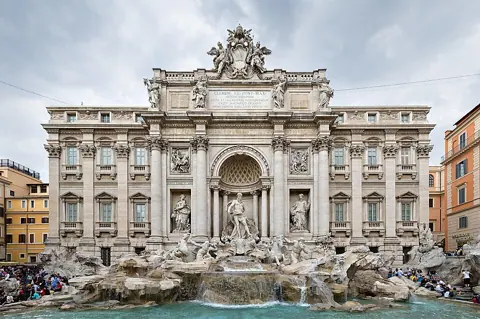
The coperto printed at the foot of a Roman restaurant bill is not a national custom you are obliged to accept. In Lazio, the region Rome sits in, adding a cover charge is prohibited by regional law, and has been in one form or another since 2006. Cards run the other way round: a Rome shop, bar or taxi that waves your card aside and asks for cash is committing a fineable offence, and has been for a payment of any size since 30 June 2022. You therefore need far less cash in Rome than older advice suggests, but you do need to read the bill, and to say no every time a card machine offers to charge you in your home currency.
Can a Roman shop refuse your card?
A Roman shop, restaurant, taxi or professional may not refuse a card payment, and since 2022 the rule has had a cash penalty attached to it. The obligation itself comes from article 15, comma 4 of decree-law 179/2012, converted by law 221/2012; an interministerial decree brought it into effect from 1 January 2014, initially for payments above EUR 30 and, in its first months, only for businesses with prior-year revenue above EUR 200,000 (Decreto interministeriale del 24 gennaio 2014, Ministero delle Imprese e del Made in Italy, checked 15 September 2026). For a decade that duty existed with nothing behind it.
The penalty arrived with article 19-ter of decree-law 152/2021, which inserted a new comma 4-bis stating that where a payment "di qualsiasi importo" made with a payment card is not accepted, the business is subject to an administrative fine of EUR 30 increased by 4 per cent of the value of the transaction refused (Art. 19 ter, Gazzetta Ufficiale, 31 December 2021, checked 15 September 2026). The same text makes the prefect of the province the authority that receives the report, and rules out the reduced settlement payment normally available under Italy's administrative penalties law.
That sanction was originally to start on 1 January 2023. Article 18 of decree-law 36/2022 pulled the date forward to 30 June 2022 and, in the same article, widened the acceptance duty from "at least one debit card and one credit card" to include prepaid cards (Art. 18, testo coordinato, Gazzetta Ufficiale, 15 July 2022, checked 15 September 2026).
What the coperto rule actually says
Lazio prohibits the coperto outright, which puts Rome in a different position from much of Italy on this one line. The current text is article 75, comma 4 of the region's Testo unico del commercio: "Nella somministrazione e' vietato applicare costi aggiuntivi per il coperto" — in food and drink service it is forbidden to apply additional costs for the cover (legge regionale 6 novembre 2019, n. 22, Consiglio Regionale del Lazio, checked 15 September 2026). This is not a new idea in the region: the near-identical ban sat in article 16 of the earlier legge regionale 29 novembre 2006, n. 21, which the 2019 code repealed and replaced (checked 15 September 2026).
A service charge is a different thing and is not banned. Comma 3 of article 75 requires that where service is at the table, the price table or listino must be made available to customers before they order and must indicate any service component in a way that makes the price clearly and easily comprehensible. Comma 2 adds that in fixed-price formats no extra service cost may be applied, and that the number and type of courses and drinks included must be itemised. Comma 1 requires the price table to be displayed inside the premises, and for restaurants also legibly from outside, excluding the wine list.
The enforcement side is unusually concrete. Article 85, comma 3 of the same law makes a breach of article 75 punishable by an administrative fine of EUR 2,500 to EUR 7,500, assessed and collected by the comune, and article 84 allows the comune to suspend the licence for five to fifteen days where the violation is repeated.
Decoding the lines on your bill
Italian bills use a small vocabulary, and only some of those words describe something you agreed to buy. The table below matches the wording you will actually see on a Rome restaurant bill to what it means and where you stand.
| Line on the bill | What it is | Where you stand |
|---|---|---|
| Coperto | Flat per-person cover charge | Prohibited in Lazio under article 75, comma 4 |
| Pane e coperto | The same cover charge, worded around bread | Contains the charge the regional rule bans |
| Servizio | Service component | Allowed if the price list showed it before you ordered |
| Acqua naturale | frizzante | Still or sparkling bottled water, ordered | A product you asked for; priced on the menu |
| IVA | Value added tax | Already inside every displayed price |
Bread is the line that causes most arguments, because "pane" can be either a product or a cover charge in disguise. Article 75, comma 1 requires the prices of products served to be made known through the displayed table or list, so bread that arrives unrequested and appears on the bill at a price that was on no list is worth querying before you pay.
Tax is not a line you need to worry about. Italy's Codice del consumo defines the selling price as the final price for a unit of the product, inclusive of VAT and every other tax (Art. 13, Definizioni, decreto legislativo 206/2005, Gazzetta Ufficiale, checked 15 September 2026). The number on the menu is the number you pay, before any service component that was disclosed to you.
Carta or bancomat at the till
Italian card terminals often ask "carta o bancomat?", and the question is about which network your payment travels on, not about what kind of card you are holding. Banca d'Italia explains that many Italian cards carry two badges: choosing "bancomat" routes the transaction through the Italian domestic circuit, while choosing "carta" routes it through an international circuit such as Visa or Mastercard (Carta o bancomat, l'una vale l'altro?, Banca d'Italia, checked 15 September 2026). A card issued outside Italy has no domestic badge, so the answer is always "carta".
Bancomat is also the everyday Italian word for a cash machine and for a debit card. Banca d'Italia's guide to the carta di debito notes that the money leaves your account immediately, that debit cards may also run on international circuits for use abroad, and that commissions can apply for withdrawing at another bank's machine or outside your own country, on top of currency conversion costs (Carta di debito, Banca d'Italia, checked 15 September 2026).
Taxis have one Rome-specific quirk worth knowing before you get in. Roma Capitale's own taxi FAQ answers the question of whether you can insist on paying by card, POS, cash or cheque by saying that you must tell the driver in advance which method you intend to use, citing the Giunta Capitolina's 2014 code of conduct for public transport operators (FAQ servizio Taxi, Roma Capitale, checked 15 September 2026). Say "pago con carta" as you sit down, not when the meter stops.
Why you decline the conversion offer
Card terminals and cash machines in Rome will offer to bill you in your own currency, and taking that offer is what dynamic currency conversion means. EU law requires the party providing the conversion at an ATM or at the point of sale to express the total currency conversion charges as a percentage mark-up over the latest available euro foreign exchange reference rates issued by the European Central Bank, and to disclose that mark-up to you before the payment starts (Regulation (EU) 2019/518, Article 3a, checked 15 September 2026). The same article requires the amount in the payee's currency and the amount in your account's currency to be shown, and requires the provider to tell you that you can instead pay in the payee's currency and let your own bank convert. Those obligations have applied since 19 April 2020.
A mark-up you can see is a mark-up you can refuse. The table below matches what the screen tends to say to what it is doing and what to press.
| What the screen offers | What it means | What to do |
|---|---|---|
| Pay in your home currency | Conversion by the terminal's provider, at its mark-up | Decline |
| Pay in EUR | Your own bank converts later, at its own rate | Choose this |
| A percentage shown on screen | The mark-up over the ECB reference rate | Read it before confirming |
How much cash to carry
Cash still has a place in Rome, but the legal ceiling is far lower than most visitors imagine and the practical need is small. Banca d'Italia states plainly that the law prohibits cash payments of EUR 5,000 or more, with penalties for both the payer and the recipient, and the same page notes that nobody is obliged to accept more than 50 coins in a single payment (Contante, Banca d'Italia, checked 15 September 2026). The cash limit is a rule about the transaction, not about how much you may carry.
For a normal trip, the honest figure is a small buffer rather than a daily budget. What cash still covers cleanly is a market stall that has lost signal, a church candle box, a coffee where the terminal is down, and rounding up a bill by a euro or two.
What this guide does not cover
This guide covers everyday payment in Rome and the Lazio rules on restaurant bills, and deliberately stops there. It does not cover the VAT refund process for non-EU residents leaving Italy, which runs through customs at the airport and has its own thresholds and paperwork. It does not cover Rome's contributo di soggiorno, the tourist tax hotels collect separately at checkout, which is a municipal charge rather than a line on a restaurant bill.
Nor does it cover the rest of Italy on the coperto. The prohibition described here is regional law made by Lazio, so it applies in Rome and across the region, and says nothing about what a restaurant in Florence, Venice, Milan or Naples may charge. Transport ticketing, which has its own payment rules and validation requirements, is also outside the scope of this piece.
Before your first meal, do two small things. Ask for the listino before you order, so that any service component is disclosed in the way article 75 requires, and settle your card habit now: when the terminal asks, choose euro.