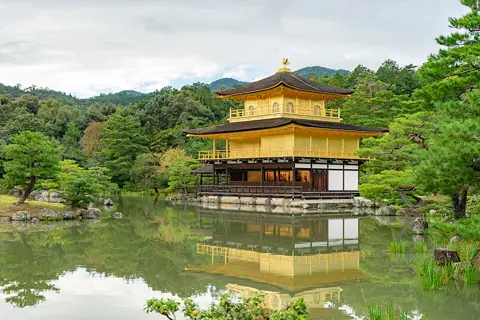
Kinkaku-ji admission: what you pay and how
There is nothing to reserve. You buy entry at the reception on arrival, and the temple's access and visiting page lists the current fees:
| Visitor | Fee |
|---|---|
| High school age and over | ¥500 |
| Elementary and junior high pupils | ¥300 |
| Groups | No discount; groups of 30 or more enter together |
These prices date from a fee revision on 1 April 2023, and the English page notes that fees and hours may change during special exhibitions.
Visitors holding a disability certificate can be exempted from the fee by showing it at the gate, according to the temple's FAQ.
Getting to Kinkaku-ji from Kyoto Station
The temple sits in the north-west of the city, away from the subway. Every public transport option ends with a city bus to Kinkakuji-michi, which the temple lists for routes 12, 59, 205 and M1, with 204 also running from the Ginkaku-ji side.
Kyoto's official tourism site sets out three ways from Kyoto Station in its Kinkakuji access guide:
| Route | How | Notes |
|---|---|---|
| Subway + bus (recommended) | Karasuma Line to Kitaoji (7th stop, about 15 min), then bus 205 from stop E or 204 from stop G | About 15 min on the bus; ignore route 206 at the same stop |
| Direct bus | Bus 205 from Kyoto Station to Kinkakuji-michi | One seat, but exposed to traffic and crowding |
| JR + bus | JR Sagano Line to Emmachi, then bus 204 or 205 | Handy if you are coming from the Arashiyama side |
The tourism office recommends the subway option because buses from Kyoto Station are often crowded, delayed by traffic or arrive bunched together.
On fares, city buses charge a flat ¥230 per adult ride (¥120 for children) inside the flat-fare zone, and the subway charges ¥220–¥360 per adult by distance under the fare table effective 1 October 2025. The subway-plus-bus route therefore adds the subway fare to the ¥230 bus fare each way. If you are also riding to other sights that day, compare that with a day pass in our Kyoto bus and subway fares guide.
When to go to beat the crowds
The temple publishes no crowd figures or busy-hour data. What it does fix is the window: 9:00 to 17:00, every day of the year, with the car park open from 8:40.
That makes the first hour after opening the obvious target if you want the pavilion reflected in the pond without a wall of phones. The direct bus from Kyoto Station is at its least reliable when the city is busiest, so on a peak-season morning the subway to Kitaoji is the safer way to be at the gate near 9:00. Late afternoon is the fallback, but leave enough time: there is no stated last-entry time, and the gate closes at 17:00.
In winter, the temple's FAQ suggests checking the forecast and its live webcam before setting out to see whether there is snow on the pavilion.
Before you go: bags, food, access and pets
- Luggage: the temple has no lockers and no bag storage. Leave suitcases at Kyoto Station or your hotel before heading north.
- Food: there is nowhere in the garden to eat a packed lunch.
- Step-free route: wheelchairs and pushchairs can reach the Golden Pavilion, but the garden beyond has steps, so you return the same way to the entrance. Wheelchairs can be borrowed at the temple without reserving, and there are accessible toilets.
- Pets: service dogs are welcome; other pets must stay in a carrier or bag.
- Driving: the temple car park holds about 250 cars and charges ¥400 for the first hour for a car, then ¥200 per 30 minutes. Buses and the subway avoid the queue on busy days.
Where to go next
To pair Kinkaku-ji with another sight, city bus 204 runs across the city to Ginkaku-ji, the Silver Pavilion, and both temples' access pages list it. For the eastern hills on another day, see our Kiyomizu-dera hours and access guide.

