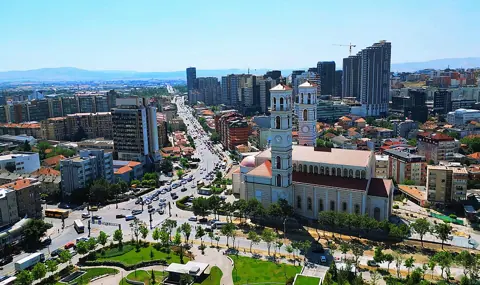
Kosovo is one of Europe's youngest countries, having declared independence from Serbia in 2008, and its economy runs less on the kind of visible export industry a traveller might expect and more on two things that don't show up on a typical sightseeing itinerary: a long-troubled mining complex in the north, and a large diaspora sending money home.
Trepca: an old industrial name, still relevant
Trepca refers to a historic and extensive lead, zinc and silver mining and metallurgical complex centred in northern Kosovo, with a history stretching back to medieval mining and a major twentieth-century industrial expansion under Yugoslavia. It was, for a long stretch of the twentieth century, one of the region's most significant industrial employers and mineral producers. Its more recent history has been shaped by conflict, contested ownership, environmental concerns tied to old mining infrastructure, and periods of reduced or interrupted operation, rather than the straightforward industrial success story its scale might otherwise suggest.
This guide could not confirm any general public visitor access to Trepca's active mining or processing sites, and treats it as a working (and historically contested) industrial complex rather than something to plan a visit around. Its relevance to a traveller is mostly explanatory: understanding that this complex exists, and has mattered enormously to the region's economy and politics for a long time, helps make sense of references to it you may encounter in Kosovo's news or public conversation.
Remittances and diaspora inflows: the bigger visible driver
According to the World Bank's own overview, diaspora inflows have provided a strong impetus to Kosovo's consumption and investment, and remittances together with foreign direct investment cover more than half of the country's current account deficit. The World Bank also describes Kosovo's economy as sustained substantially by consumption, remittances and non-tradable investment, rather than by a strong export or tradable-goods sector, and notes that accelerating convergence with EU living standards would require shifting toward more productivity-driven growth.
In practical terms, this means a very large share of money moving through Kosovo's economy originates from Kosovars living and working abroad — sending money to family, investing in property, or returning periodically — rather than from goods Kosovo sells internationally. This is a genuinely large-scale, structural feature of the economy, not a minor side detail.
What a visitor actually sees of this
Neither Trepca nor the diaspora remittance economy presents as a tourist attraction, but both leave visible traces if you know to look:
- Newer, sometimes architecturally distinctive houses in villages and smaller towns, a number of which are commonly understood locally to be funded at least partly by money sent or brought back from family working abroad.
- Businesses, particularly in hospitality and retail, connected to returning or visiting diaspora members, especially noticeable during summer, when many Kosovars living abroad return for extended visits.
- References to Trepca in local news, political discussion, or historical exhibits, which make more sense once you understand its long industrial and political significance rather than treating it as an unfamiliar name.
Why this matters for how you understand Kosovo
A country whose growth is driven substantially by remittances and consumption, rather than a strong domestic export or manufacturing base, has a different underlying economic story than its neighbours' more industrial or tourism-driven models. This isn't a judgment on Kosovo — it reflects a young state still building formal economic institutions after a difficult and disruptive recent history — but it's a genuinely useful piece of context if you want to understand what you're seeing beyond the sightseeing layer of a visit.
What this pattern shares with, and differs from, its neighbours
Kosovo's reliance on diaspora inflows echoes a pattern visible elsewhere in the region — Albania and North Macedonia both have significant emigrant populations whose remittances matter to their home economies too — but the World Bank's characterisation of Kosovo's growth as substantially consumption- and remittance-driven, rather than export- or investment-led, marks it out as a particularly clear example of the pattern within the Balkans. This isn't unique to postwar or newly independent states generally, but Kosovo's combination of a very young population, a recent and disruptive conflict, and a still-developing formal export base makes the remittance channel unusually central to how money actually moves through the country day to day, compared with economies that have had longer to build alternative growth drivers.
A caution about drawing conclusions from a short visit
It's worth resisting the temptation to read too much into what you personally observe of this pattern during a short visit. A newly renovated house, a diaspora-connected business, or a busy summer street scene are all real and genuine signals, but none of them constitutes evidence of a specific economic statistic, and this guide would be overstating its own reliability if it implied otherwise. Treat what you notice as texture that makes an economic description more concrete, not as a substitute for the sourced figures a body like the World Bank or Kosovo's own central bank can actually provide.
What this guide does not cover
This article does not cover Kosovo's broader political history, the details of the Trepca ownership disputes, or a full sector-by-sector breakdown of the economy, since a reliable current breakdown beyond what the World Bank overview provided could not be confirmed for this piece. Kosovo's own statistics agency and the World Bank's country data pages are the appropriate places to check current, sourced figures.