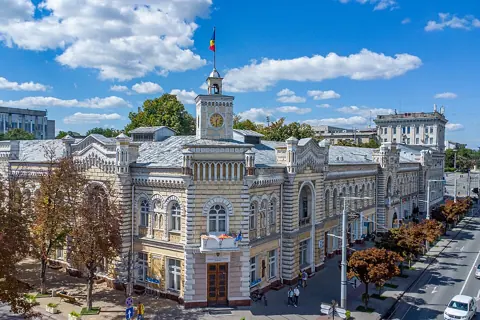
Moldova is regularly cited among the least-visited countries in Europe, a fact that has as much to do with geography and limited tourism infrastructure as with anything specific holding travellers back. But one topic does come up whenever Moldova is discussed seriously by anyone planning a visit: Transnistria, a strip of land on Moldova's eastern border that functions, in practice, outside the control of the Moldovan government in Chisinau.
This article stays deliberately factual and attributed to official sources. It does not take a position on Transnistria's political status, and it neither encourages nor discourages visiting — that judgment depends on your own risk tolerance, nationality, and current conditions, which this guide cannot assess for you.
Why Moldova sees so few visitors
Moldova consistently ranks among Europe's lowest-visited countries in international tourism comparisons, a position generally attributed to its landlocked location between Romania and Ukraine, limited international name recognition as a travel destination, comparatively underdeveloped tourism infrastructure relative to Western and Central European neighbours, and — more recently — its proximity to the war in Ukraine, which has affected regional travel patterns and perceptions of the wider area. None of these factors is unique to Moldova individually, but together they've kept visitor numbers low enough that Moldova is genuinely unfamiliar territory for most travellers, in a way few other European countries are today.
What Transnistria actually is
Transnistria (also called Transdniestria or Pridnestrovie) is a strip of territory along Moldova's eastern border with Ukraine that has functioned under separate, self-declared administration since a conflict in the early 1990s following the collapse of the Soviet Union. It is not recognised as an independent state by the United Nations, by Moldova, or by the large majority of the international community, and Moldova continues to treat the territory as part of its own sovereign land, even though Chisinau does not exercise practical administrative control there.
The OSCE Mission to Moldova, established in 1993, has worked since then toward what it describes as "a lasting, comprehensive political settlement of the Transdniestrian conflict in all its aspects," acting as a mediator between negotiators from Chisinau and Tiraspol (Transnistria's largest city and administrative centre) and monitoring conditions in a security zone along the Dniester River that separates the two sides. As of early 2026, the OSCE reported facilitating a direct meeting between the two sides' chief negotiators — their first in-person discussion in over a year — an indication that the situation remains an active, unresolved diplomatic process rather than a settled one.
How the region is administered in practice
In practice, Transnistria operates its own currency, its own administrative and security apparatus, and border-type checkpoints at its boundary with the rest of Moldova, none of which is recognised as a legitimate international border by Moldova or the wider international community, but all of which function as real, practical obstacles for anyone crossing. According to the U.S. Department of State's own travel guidance, Western credit cards and mobile phones generally do not work inside Transnistria, Moldovan currency is not accepted there, and many local businesses lack legal registration recognised by Moldovan authorities — details that reflect a genuinely separate, if unrecognised, administrative and economic system.
What official sources say about visiting
The U.S. State Department currently rates travel to Transnistria at Level 3, "Reconsider Travel," its second-most-restrictive advisory tier, citing limited ability to provide consular assistance to U.S. citizens in the region since Transnistria's authorities, not Moldova's, control practical access there. The advisory also notes that Ukraine has closed its border crossings into Transnistria, meaning access into the region currently runs through Moldova rather than from the Ukrainian side.
What this means for a Moldova trip that doesn't involve Transnistria
The large majority of a Moldova visit — Chisinau, the wine regions around Cricova and Mileștii Mici, towns like Bălți and Cahul — has no connection to Transnistria at all, and nothing about the region's unresolved status affects travel within Moldova's internationally recognised territory. Treat Transnistria as a genuinely separate decision requiring its own specific research, rather than something that colours the rest of a Moldova trip by association.
Why this matters even if you never plan to go near the border
Even a Moldova trip with no intention of approaching Transnistria benefits from understanding the basic shape of the situation, since it comes up in conversation with Moldovans, in news coverage of the country, and in how some travel insurance policies and government advisories are written for the country as a whole. Some travel insurance products, for instance, distinguish coverage for Moldova generally from coverage in Transnistria specifically, and being aware of that distinction before you buy a policy is more useful than discovering it after the fact. Treat this article as background that helps you understand what you might read or hear during a Moldova trip, not as a reason to change plans that have nothing to do with the region.
What this guide does not cover
This article explains what Transnistria is, how it functions administratively, and where official mediation and travel-advisory information can be found; it does not provide a recommendation on whether to visit, entry logistics, or a historical account of the underlying conflict beyond what is needed to understand the region's current status. For anything beyond this overview, consult the OSCE Mission to Moldova and your own government's current travel advisory directly.