Before you land
Complete your eTravel registration. It is the government's arrival system, it is free, the guidance is to register within 72 hours before arrival, and only the official government site should be used. Save the QR code offline rather than trusting airport wifi at the immigration queue.
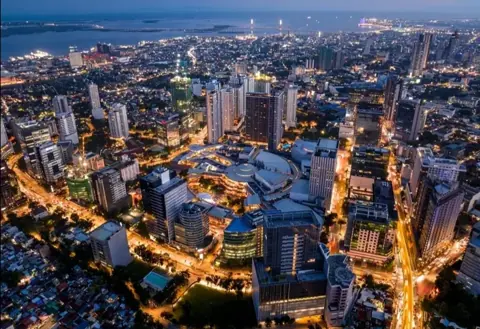
Confirm your accommodation's exact location, including the city. Cebu's metropolitan area spans several local government units, and a place described loosely as "Cebu" might be in Cebu City, in Lapu-Lapu City on Mactan Island, or in Mandaue in between.
Mactan or the mainland
This distinction shapes your whole trip, so it is worth being clear about it on day one.
The airport authority states the airport is on Mactan Island and is connected to Cebu City by the Mactan-Mandaue bridge and the Marcelo Fernan bridge. Mactan is where most beach resorts and dive operators are based. Cebu City is the urban centre, with the older districts, the commercial areas and the bus terminals for onward travel.
Neither is better; they answer different questions. What causes frustration is a plan that ignores the bridge, because crossing it in peak traffic is the slowest part of any Cebu itinerary.
Leaving the airport
Two things before you walk out.
Get pesos. Aim for small notes rather than one large one, because taxis, jeepneys and small shops all deal in change and a high-denomination note is awkward for a short ride.
Then use an official taxi stand or a booked app ride. The airport publishes its taxi services on its own site, and the general rule anywhere applies here: use the marked stand, do not accept an approach inside the terminal, and have your destination written down rather than pronounced.
Getting online
If you did not arrange an eSIM before flying, be ready for the paperwork. Philippine law requires SIM registration, and for tourists the statute specifies a passport, proof of address in the Philippines, and a return ticket or other ticket showing your departure. Tourist-registered SIMs are valid for thirty days and are automatically deactivated after that.
Have the address of your first accommodation written down before you reach a counter. That one preparation turns a slow errand into a quick one.
Set the pace on day one
Cebu City is compact compared with Metro Manila, which tempts people into ambitious first days. Resist it while you are still tired.
A good first evening is local: walk the immediate area, find a convenience store or supermarket, buy water, eat somewhere nearby, and work out which direction transport runs. You will plan the rest of the trip better for having done nothing much on the first night.
Weather sets the shape of your days
The national weather agency describes two seasons: a dry season from December to May, subdivided into a cool dry period from December to February and a hot dry period from March to May, and a rainy season from June to November.
In the hot dry months, plan outdoor time for the morning and treat the middle of the day as indoor time. In the rainy months, expect afternoon rain as normal rather than exceptional, and keep an indoor alternative identified for each day.
Planning day two properly
Once you have your bearings, the useful questions are these. Are you crossing the bridge tomorrow, and if so, at what hour? Is your main activity weather-dependent, and what is the fallback? Are you booking any onward travel, whether a domestic flight, a ferry or a long bus, and does it need reserving in advance?
Answer those three on your first evening and the rest of the trip tends to organise itself.
A short first-day list
eTravel saved offline before landing. Accommodation location confirmed by city, not just by name. Cash withdrawn in small notes. Official taxi or booked ride from the terminal. Connectivity sorted with the address to hand. One local evening. Then plan tomorrow.