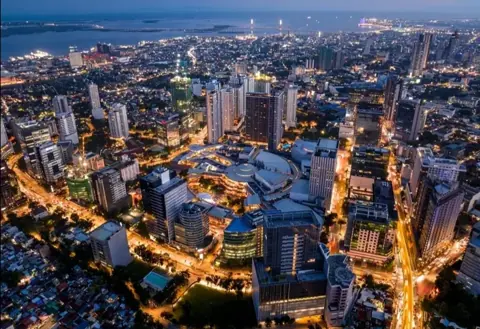
Understand the geography first
This is the piece that reframes everything else. The airport authority states plainly that the airport is located on Mactan Island in the province of Cebu, and that it is connected to Cebu City through the Mactan-Mandaue bridge and the Marcelo Fernan bridge. The airport's own address places it in Lapu-Lapu City.
The airport replaced the older Lahug Airport, which was inside Cebu City itself, and the airport authority was created by law in 1990 to manage airports in the province.
So a transfer from the airport is an island-to-mainland journey with a bridge crossing in the middle. The second bridge, formally named the Marcelo B. Fernan Bridge by law, is the newer of the two original crossings. A separate toll bridge, an 8.5-kilometre link between Cebu City's South Road Properties and Cordova on Mactan Island, provides another route across the channel.
Check your terminal
The airport operates two passenger terminals, and the authority refers to them as Terminal 1 and Terminal 2. Your arrival terminal determines which curbside you emerge onto and where transport is waiting.
Terminal assignments follow airline and route rather than a simple domestic and international split you can assume in advance, so read your booking rather than relying on a general rule.
Taxis from the marked stands
The airport publishes dedicated pages for its taxi services on its official website, and taxis are the most common way visitors leave the terminal.
The practical advice is the same as at any airport: use the official stands rather than accepting an approach inside the building, agree how you are being charged before setting off, and have your destination written down. Cebu City addresses often reference barangays and landmarks rather than street numbers alone, so a written address or a map pin removes the ambiguity.
Bus and app options
A bus service operates between the airport area and Cebu City, and the beep stored-value card operator lists a Cebu City to Mactan bus among the services where its card is accepted. That makes a beep card worth having if you plan to use city buses during your stay.
App-based rides operate in the Cebu area as well, and they carry the same advantages as anywhere else: a recorded trip, a named driver and a price agreed in advance. Availability at the terminal and the designated pickup point are worth checking on arrival, since airports commonly designate a specific bay.
Choosing between them
| Option | Suits | Trade-off |
|---|---|---|
| Airport taxi | Arrivals with luggage, direct door-to-door | Cost, and confirming the charging basis |
| Bus | Travelling light, budget-conscious | Fixed stops and schedule |
| App ride | Wanting a recorded trip and set price | Finding the designated pickup point |
What actually determines your journey time
The bridges. Traffic at the crossings between Mactan and the mainland is the main variable, and it is worse at peak hours in the direction people commute. The same transfer can be comfortable at mid-morning and slow at 6pm.
There is no rail alternative to fall back on. The transport department has described a Metro Cebu urban rail project as still in the study stage, and the Cebu Bus Rapid Transit project has been reported as nearly complete on its first package but not yet in service. So for now every option on this route shares the same roads.
Before you leave the terminal
Get some pesos if you have none, since a taxi or bus is easier with cash and small notes. Confirm whether your accommodation is in Cebu City, in Lapu-Lapu City on Mactan, or in Mandaue in between, because those are three different journeys. And if you are arriving in the evening peak, add a generous allowance to whatever travel time you were quoted.