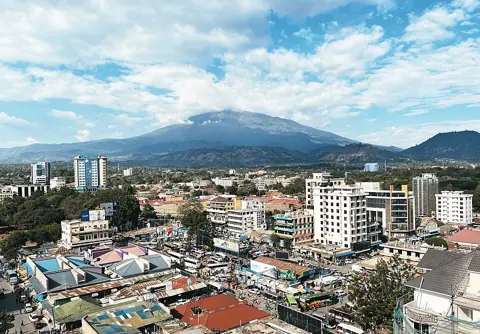
In 1959 the original Serengeti National Park was split in two, according to the NCAA's own history. The western plains stayed a national park, now run by TANAPA. The highlands around the crater became the Ngorongoro Conservation Area, run by a separate authority. That split, not any single fee, explains why a northern-circuit safari quote carries two sets of park charges with different rules.
Why does one safari pay two different authorities?
The two areas are protected under different models. TANAPA manages the Serengeti under the National Parks Act as a wildlife park. The Ngorongoro Conservation Area was designed as a multiple land use area. Its three mandates, as the NCAA lists them, are to conserve natural resources, promote tourism, and safeguard the interests of the Maasai who live and graze livestock there. UNESCO's Ngorongoro listing describes the same arrangement: wildlife coexisting with semi-nomadic Maasai pastoralists across 809,440 hectares.
The two areas are one landscape for wildlife. UNESCO notes that the Serengeti's 1,476,300 hectares sit next to Ngorongoro and form part of a migration route used by more than a million wildebeest. On the ground you drive from one into the other. At the gate, though, you are dealing with two separate authorities, each with its own tariff, receipts and permit rules.
How much are Serengeti and Ngorongoro fees?
The headline numbers look similar but are calculated differently. TANAPA's 2023/24 tariff states that "all charges are VAT (18%) exclusive". The NCAA tariff page lists final figures with no separate VAT line. The NCAA does not say whether its figures include VAT, but they match a round base plus 18% exactly: 60 × 1.18 = 70.80 and 250 × 1.18 = 295. Either way, the Serengeti's USD 70 becomes USD 82.60 once VAT is added, more than Ngorongoro's listed USD 70.80.
| Fee (non-East African visitor) | Serengeti (TANAPA), before VAT | Serengeti with 18% VAT | Ngorongoro (NCAA), as listed |
|---|---|---|---|
| Adult entry, 16 and over | USD 70 (USD 60 from 15 March to 15 May) | USD 82.60 (USD 70.80) | USD 70.80 |
| Child entry | USD 20 (ages 5 to 15) | USD 23.60 | USD 23.60 (listed as ages 5 to 16) |
| Lodge or camp concession, adult per night | USD 60 (July to September), USD 50 (October to June) | USD 70.80 / USD 59.00 | USD 59.00 |
| Crater service fee | None | None | USD 295 per vehicle per trip |
The Serengeti has two different sets of seasons. The conservation fee drops only from 15 March to 15 May. The concession fee, charged for each night at a lodge or tented camp inside the park, is at its higher rate from July to September. A night in the Serengeti in late May therefore carries the peak entry fee but the lower concession fee.
Vehicle fees come on top and depend on tare weight. The NCAA charges foreign-registered vehicles USD 47.20 to USD 354.00 and Tanzanian-registered ones TZS 23,600 to TZS 177,000. TANAPA has its own weight bands. On an operator's safari these are normally included in the vehicle price, but ask.
Do you pay Ngorongoro fees just to reach the Serengeti?
Yes. The NCAA's FAQ answers the question directly: if you drive through the conservation area to regions such as Mara or Mwanza, you pay. So a road itinerary from Arusha that passes through Ngorongoro to reach the Serengeti carries the Ngorongoro permit even if the vehicle never goes down into the crater. From Seronera in the central Serengeti, the NCAA estimates about three hours to the crater, depending on the road.
The two authorities also count time differently. A TANAPA sleep-over permit is valid for 24 hours and allows multiple entries within that time. The NCAA's permit is "valid for one entry within 24 hours only", and its visitor rules add that all permits, including the crater service fee, are single entry. Crossing Ngorongoro on the way to the Serengeti and again on the way back to Arusha means two NCAA permits, even if the two crossings are only a few days apart.
A worked example: two adults, two nights in the Serengeti in August
Take two non-East African adults on a road safari from Arusha. They cross Ngorongoro on day 1, spend two nights at a lodge inside the Serengeti, and on day 3 drive back through Ngorongoro with a crater game drive. This assumes each Serengeti stay fits within two 24-hour permits.
- Serengeti conservation fee: 2 people × 2 permits × USD 70 = USD 280
- Serengeti concession fee (August rate): 2 people × 2 nights × USD 60 = USD 240
- TANAPA VAT: 18% of USD 520 = USD 93.60, so TANAPA's total is USD 613.60
- Ngorongoro permits: 2 people × 2 entries × USD 70.80 = USD 283.20
- Crater service fee: USD 295 for the one vehicle
- NCAA total: USD 578.20
That comes to USD 1,191.80 for the couple, or USD 595.90 each, before vehicle fees. The crater fee is charged per vehicle, so a vehicle shared by more people lowers each person's share. A second night spent on the Ngorongoro side adds the NCAA concession fee and another 24-hour permit.
Where the park fee money goes
TANAPA runs mostly on the money it collects. Its history page says wildlife tourism income is "ploughed back for management, regulation and fulfillment of organizational mandates". The October 2024 Quick Reference shows how uneven that income is. In 2023/24 TANAPA collected TZS 410.9 billion across 21 parks. The five northern-zone parks, from Kilimanjaro to Tarangire, brought in 41.90% of it. The document adds that "outside the northern zone, only Serengeti breaks even", and that the surplus helps support parks that do not.
In practice, a Serengeti conservation fee helps pay for parks that most visitors never see. The NCAA fee pays for an authority whose mandate also covers the resident Maasai population. UNESCO lists tourism pressure, including visitation, traffic and new infrastructure, as a management concern for Ngorongoro, and the crater service fee is one of the few charges in either tariff levied per vehicle rather than per person.
What to check on a safari quote
If you book through an operator, these fees are usually folded into a package price, which is why the breakdown matters. TANAPA's tariff says payments go through the government's electronic payment gateway, TANAPA's online reservation system, bank cards or mobile money.
- Ask for park fees as a separate line: Serengeti permits, Serengeti concession nights, NCAA permits and crater fee.
- Check that Serengeti figures show VAT added (USD 82.60 or USD 70.80 per adult day) and NCAA figures do not.
- Count the Ngorongoro crossings: one permit for each entry, not one for the whole trip.
- If the itinerary crosses a season boundary (15 March, 15 May, 1 July, 1 October), check which rate is used.
The UK Foreign Office's Tanzania safety page, updated in September 2026, advises British travellers to use reputable operators rather than touts. It notes that the Tanzania Association of Tour Operators keeps a list of licensed companies. Planning a climb as well? Our Kilimanjaro fees guide uses the same TANAPA tariff.