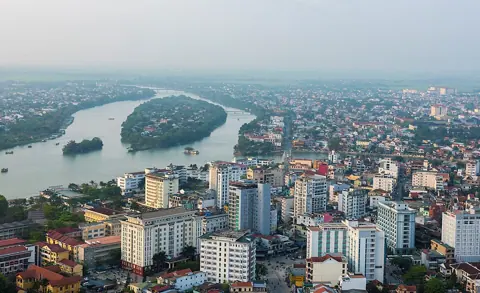
Hue takes cards at hotels, larger restaurants, and shopping centers, but you should plan on cash for markets, street food, xích lô rides, and many of the historic-site ticket counters. That split is the practical answer, not a hard rule, since acceptance shifts business by business rather than by neighborhood.
Why Hue Leans More on Cash Than Hanoi or Saigon
Hue is a smaller, less touristed city than Hanoi or Ho Chi Minh City, and its economy runs more on family businesses than international chains. A place that sees fewer foreign card transactions has less incentive to absorb the processing fees a card reader adds. That's the main reason cash still does more of the daily work here than it does in the bigger cities.
This doesn't mean Hue is behind. It means the mix of businesses is different: more independent restaurants, more market stalls, more single-owner guesthouses, and fewer large hotel chains and retail groups that install card terminals as standard equipment.
Where Cards Are a Safe Bet
International-standard hotels and hotel restaurants in Hue generally accept Visa and Mastercard, and some take Amex. Larger restaurants aimed at tour groups, supermarkets, and shopping centers usually run card terminals too.
Contactless and tap-to-pay are becoming more common at these larger venues, but don't count on it as the default. Chip-and-PIN or a signature is still the more reliable expectation.
Where You'll Want Cash Ready
Local markets like Dong Ba Market run on cash almost entirely, and so do most street food stalls, cyclo and xích lô drivers, and small family-run eateries away from the main tourist strip. These are exactly the places that give Hue its character, so cash isn't a backup plan here — it's the plan.
Ticket counters at sites such as the Imperial Citadel and the royal tombs may or may not run card machines. Bring cash for entrance fees rather than assuming a counter will take your card, since a broken connection or an unstaffed terminal can leave you stuck at the gate with no backup.
Getting Dong Without Losing Money to Fees
ATMs are the standard way to get Vietnamese dong, the country's sole legal tender issued by the State Bank of Vietnam, once you're in the country, and they're common in central Hue. Two things cost you money if you're not careful: your home bank's foreign transaction and ATM fees, and the Vietnamese bank's own withdrawal fee, which is usually a flat charge per transaction rather than a percentage.
When a card terminal asks whether to charge you in dong or your home currency, choose dong. The "convert to home currency" option (dynamic currency conversion) almost always applies a worse exchange rate than your own bank would give you.
Setting a Cash Buffer That Actually Works
A reasonable habit in Hue is to carry enough dong to cover a full day of markets, meals, transport, and one attraction ticket, then top up from an ATM when you're running low rather than waiting until you're empty. Exact comfortable amounts vary by travel style, so treat this as a pattern to follow rather than a number to hit.
If your plans include day trips to smaller towns near Hue, or you're heading onward to rural stretches of central Vietnam, check ATM availability before you leave the city. Machines thin out quickly outside urban centers, and running low on dong in a place with no working ATM is a harder problem to fix on the spot than simply carrying more before you go.
What This Guide Doesn't Cover
This article doesn't state specific ATM withdrawal limits, bank fee amounts, or which named banks currently offer fee-free withdrawals for foreign cards, since those terms change and vary by bank on both sides of the transaction. Confirm your own bank's foreign ATM fee policy before you travel, and check current withdrawal limits at the ATM screen itself when you use it in Hue.