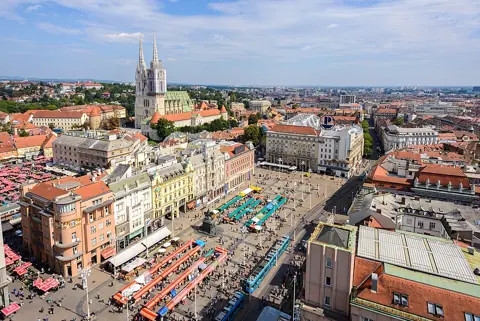
Zagreb Airport to the city
Zagreb's Franjo Tuđman Airport is served by Pleso Prijevoz, a dedicated shuttle operator whose own site describes a shuttle running every 30 minutes between the airport and Zagreb's main bus station (Autobusni kolodvor Zagreb). The operator's site did not list a specific journey time or current fare on the page reviewed for this guide, so confirm both directly through Pleso Prijevoz's own booking channel before you travel. Taxis and ride-hailing also operate from the terminal as alternatives.
Split Airport to the city
Split Airport sits a meaningful distance from the city centre, on the Kaštela side of the bay. This guide was unable to reliably access Split Airport's own transport pages to confirm current bus operator details, frequency or fares for this specific route. Rather than guess, the honest guidance is to check Split Airport's own "getting to and from the airport" page directly before you fly, and to keep a taxi or pre-booked transfer as a backup if your arrival time falls outside whatever the current public bus schedule turns out to be.
Why trains struggle to compete on the coast
Croatia's rail operator, HŽ Putnički prijevoz, lists Zagreb, Split, Rijeka, Osijek and Zadar among the stations on its network, according to the operator's own site. What the network's station list does not convey on its own is journey time: Croatia's rail lines toward the coast largely predate modern high-speed engineering and run through mountainous terrain between the continental interior and the Adriatic, which tends to make coastal rail journeys considerably slower than a comparable bus or drive along the modern highway network built more recently and more directly for road traffic.
This is why, in practice, long-distance buses handle a large share of coastal travel within Croatia — a well-developed intercity coach network generally offers more frequent departures and shorter journey times between Zagreb and coastal cities like Split than the train does. This guide could not verify a specific current journey-time comparison between the two modes for this route, so if timing matters for your plan, compare both directly before booking rather than assuming the bus is automatically faster on every specific route.
Ferries: the only way to most islands
Croatia's Adriatic coast is lined with islands, and the overwhelming majority have no bridge or tunnel connection to the mainland — a ferry is the standard, and usually the only, way to reach them by land-adjacent transport. Ferry frequency and route options vary significantly by island and by season, with far more frequent summer sailings than in the off-season on many routes. Because specific ferry schedules and fares change seasonally and were not verified for this guide, treat the national ferry operator's own current timetable as the authority for any specific island crossing you're planning, rather than a fixed schedule.
Comparing your options
| Option | Best for | Trade-off |
|---|---|---|
| Airport shuttle (Zagreb or Split) | Straightforward city-centre-bound arrivals | Terminates at a hub, not your final address |
| Intercity bus | Coastal city-to-city travel | Comfort varies by operator and route |
| Train | Continental routes and confirmed HŽ-served stations | Slower on most coastal corridors |
| Ferry | Any island destination | Schedule and frequency shift heavily by season |
Booking patterns that save you a bad surprise
Bus tickets in Croatia are commonly sold through the individual coach operator's own site or app rather than a single unified national booking platform, so comparing prices and times across the coast can mean checking more than one operator's page for the same route. Reserving a specific seat ahead of peak summer weekends is worth doing on popular coastal corridors, since buses running between Zagreb and Dalmatia in July and August fill up in a way that off-season travel simply does not.
Ferry bookings follow a similar logic: the state ferry operator publishes summer and winter timetables that differ substantially, and popular routes to well-known islands can sell out vehicle spaces well ahead of a summer sailing even when foot-passenger tickets remain available. If you're travelling with a car, book your ferry crossing earlier than you would a foot-passenger ticket for the same route.
Before you commit to a route
Compare the bus and train options for your specific city pair directly on their current timetables before booking, since Croatia's rail and coach networks do not treat every route the same way — some inland routes work well by train, while most coastal routes favour the bus. For island travel, check the relevant ferry operator's seasonal schedule well before your travel date, since off-season sailings can be far less frequent than summer ones.