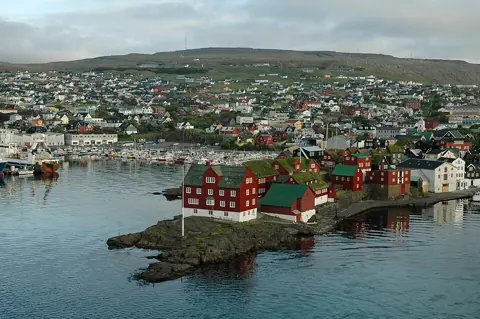
Walk along the harbour in Tórshavn or Klaksvík and the economic story of the Faroe Islands is mostly out of sight: it's in the fjords, where salmon pens sit in sheltered water, and in a handful of processing plants that don't run public tours. Fish, farmed and wild, is not one industry among several here — it is the industry the rest of the economy is built around.
Why fish dominates so completely
The Faroe Islands have a small population, a mountainous landscape unsuited to large-scale agriculture, and cold, nutrient-rich North Atlantic waters immediately offshore. That combination has made fishing the backbone of the economy for generations, first through wild-catch fisheries — cod, haddock, and pelagic species like herring and mackerel — and more recently through farmed Atlantic salmon, which has grown into the larger export earner of the two. Fish products, in one form or another, account for the large majority of the country's total exports, a concentration few developed economies have in a single sector.
Who farms the salmon
Bakkafrost, headquartered in Glyvrar on Eysturoy, is the largest Faroese salmon farming company and describes itself as a vertically integrated producer, meaning it controls stages from feed production through farming to processing under one company rather than outsourcing each step. A smaller number of other Faroese aquaculture companies operate alongside it. None of these companies run a general visitor tour programme of their farms or processing plants — this is industrial food production, not an attraction, and the companies say so plainly on their own sites rather than implying otherwise.
The debate you'll hear about if you ask
Open-net salmon farming, the method used in the Faroe Islands as in Norway, Scotland, and Chile, sits at the centre of an ongoing environmental debate wherever it's practised. Concerns raised by critics internationally include the effect of concentrated fish waste and uneaten feed on the seabed beneath pens, sea lice transferring between farmed and wild fish populations, and the risk of farmed fish escaping into wild stocks. Industry bodies and companies including Bakkafrost respond with sustainability commitments and third-party certifications, arguing improved farming practices reduce these risks. This guide does not take a side in that debate; it is worth knowing it exists before you form an impression from a single postcard-perfect view of a fjord full of pens.
What is not in dispute is the industry's weight in the Faroese economy: salmon farming's export value and the jobs tied to farming, feed production, processing, and shipping give the sector significant influence over the islands' overall economic health, in a way that makes swings in salmon prices on world markets a genuinely national concern rather than a niche business story.
What a visitor actually encounters
Beyond the pens themselves, the fishing and aquaculture economy shows up in ways that are easier to experience directly:
- Harbourside activity in Tórshavn and Klaksvík, where fishing vessels dock and gear is visible even without a scheduled tour.
- Seafood on restaurant menus, ranging from traditional dried and fermented fish preparations to contemporary dishes built around fresh-caught cod, langoustine, and salmon.
- Processing and shipping infrastructure around the larger harbours, more visible as industrial buildings and refrigerated trucks than as anything designed to be looked at.
- Local grocery stores, where the range and freshness of seafood on sale reflects a domestic supply chain built for a fishing economy, not one importing most of its stock.
How the industry shapes everyday life beyond the harbour
The concentration of the economy in fishing and aquaculture reaches further into daily Faroese life than the industry name alone suggests. Villages and towns positioned near good harbours or sheltered fjords grew and retained population precisely because of their usefulness to the fishing and, more recently, farming industries — the same sea-based settlement pattern that later determined where the islands' tunnel network was built — while more exposed or harder-to-reach settlements have seen population decline over recent decades — a pattern tied directly to where the jobs are. Wages and employment across the islands track the health of the fishing and salmon sectors closely enough that a downturn in global salmon prices or a poor wild-catch season is felt well beyond the companies directly involved, in construction, retail, and local services too.
This also explains some of the country's other economic choices, including its continued position outside the European Union's Common Fisheries Policy — the Faroe Islands negotiate their own fishing agreements separately, a position tied directly to protecting control over the waters the entire economy depends on.
What this guide does not cover
This article explains the shape of the Faroese fishing and aquaculture economy and what a visitor can and cannot see of it; it is not a review of any specific company's environmental practices or an endorsement of farmed salmon as a product. For current production figures, export statistics, or company-specific sustainability claims, consult Statistics Faroe Islands (Hagstova Føroya) or the individual companies' own published reports rather than treating any single source, including this one, as the final word.