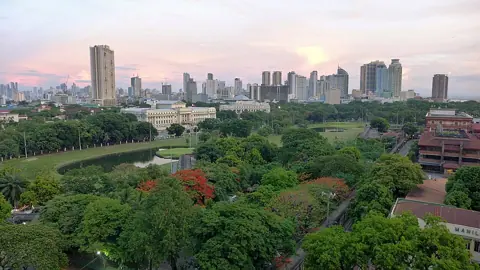
Build the day around journey time, not distance
Metro Manila's traffic means a destination that looks fifteen minutes away on a map can take an hour, and a plan with three stops in different districts becomes a day spent in a car.
The version that works with children is simple. One anchor activity per day. Everything else within walking distance or one short ride of it. Return to your accommodation for a rest in the afternoon if your children still nap, because trying to push through it in the heat has a predictable outcome.
Getting around with a family
Ride apps are the practical default. Grab's Philippine transport lineup includes GrabFamily with child seats for children in a defined younger age range, a six-seater car for groups, and hourly rental blocks that are useful on a day with several stops.
The six-seater is the one families underestimate. Two adults, two children, a pushchair and a day bag do not fit comfortably in a standard sedan, and sorting that out at the curb with tired children is avoidable.
The rail lines are efficient along their corridors but get very busy at peak times, which is a different proposition with small children than with adults. Off-peak, they are a good way to skip traffic.
Heat and weather
The national weather agency describes a dry season from December to May, split into a cool dry period from December to February and a hot dry period from March to May, with the rainy season running June to November.
December to February is the most comfortable stretch for outdoor time. March to May is genuinely hot, and with children that means shifting outdoor plans to early morning and treating the middle of the day as indoor time. In the rainy months, afternoon rain is normal, which pushes the day into a similar shape for a different reason.
Air-conditioned malls are not a compromise here, they are infrastructure. They combine food, toilets, pharmacies, seating and space to move around, and families use them the way families elsewhere use parks.
At the airport
The airport publishes its amenities by terminal, including medical clinics, charging stations, free wifi in passenger movement areas and tourist information counters in the arrival lobbies. Knowing where the clinic is in your terminal is one of those things you never need until you do.
Long-haul arrivals with children benefit from the same rule as everyone else, only more so: get cash, take an accredited taxi or a booked app ride from the official points, and go straight to the accommodation. First-day sightseeing with jet-lagged children is a plan that rarely survives contact with reality.
On departure, note that the tourism authority's travel tax exemption list includes infants aged two and below among the exempt categories, and that other charges have their own separate exemption lists. Check your specific situation with the airline rather than assuming.
Food and daily logistics
Eating out is easy and generally family-friendly, with malls offering the widest range of options in one place and the shortest walk between a fussy child and an alternative.
Supermarkets stock the everyday items you might need, including nappies, formula and familiar snacks, though specific brands vary. If your child depends on a particular product, bring enough rather than planning to find it.
Pharmacies are widespread in malls and commercial areas. Bring your usual children's medication from home with its packaging, since matching a familiar product to a local equivalent is harder when someone is unwell.
A realistic daily shape
Early start while it is cooler. One anchor activity in the morning. Lunch and a rest indoors through the hottest hours. Something low-effort and close by in the late afternoon. Dinner near where you are staying. It looks modest written down, and it is the version that leaves everyone willing to do it again the next day.