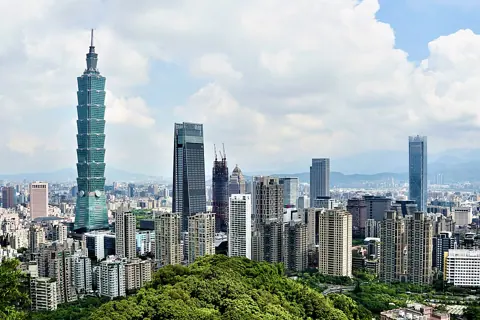
Taipei rewards visitors who understand its shape before they arrive, rather than treating it as one dense downtown to be conquered on foot. This overview is meant to be the map, not the manual: it orients you to how the city fits together and what basics you need in place, and points you toward the deeper guides that actually walk you through transit, money, arrival, and accessibility in detail rather than repeating them here.
Who this overview is for
This is for someone planning their first trip to Taipei who wants the big picture before diving into logistics: how the city is laid out, what to have sorted before you land, and how to think about pacing your trip. If you already know Taipei's districts and just need the mechanics of getting an EasyCard or handling your airport transfer, the dedicated guides on those topics will serve you better than this one.
Treat this as the article you read before you start booking anything, not the one you reread the night before you fly. Its job is to help you ask the right follow-up questions, not to answer every one of them itself.
The city's shape: an MRT-served core surrounded by districts
Taipei isn't one dense center so much as a collection of districts connected by a metro system that makes the whole arrangement work. The MRT lines roughly trace the city's commercial and residential centers of gravity, meaning that if you're staying near a station, you're generally within reasonable reach of most of what a first-time visitor wants to see.
Districts have distinct characters rather than blending into an undifferentiated downtown. Some are dense with shopping and nightlife, others are quieter and more residential, and a few sit at the edge of the MRT network closer to hills or the river, which changes how you should think about travel time to and from them. Rather than memorizing district names in advance, it's more useful to know that "which district" is a real question worth answering when you book accommodation, since it affects your daily travel time more than the raw map distance suggests.
Beyond the core city, Taipei is also a practical base for day trips into the surrounding region, hillside towns, hot spring areas, and coastal spots included, which is worth factoring into your pacing decisions rather than assuming every day of your trip needs to be spent within the city itself. A day trip changes the shape of that day entirely, since round-trip travel time outside the MRT network runs longer than anything you'd budget for moving between city districts.
The practical basics, in overview
Taiwan's currency is the New Taiwan Dollar, and the country runs on right-hand traffic with Type A and B electrical plugs at 110V, so a plug adapter matters if you're arriving from a country with a different plug shape or voltage expectation, though many modern chargers handle the voltage difference automatically. None of this is unusual for a first trip, but it's worth confirming for your specific devices rather than assuming.
Local transit runs on a rechargeable smartcard system known as the EasyCard, which covers the MRT, buses, and a range of other everyday payments beyond just transit. Getting oriented with how the card works, where to get one, and how to top it up is its own topic covered in a separate how-to guide, so this overview only flags that it exists and that it's worth sorting out early in your trip rather than midway through it.
Connectivity, whether you arrive with an eSIM, buy a local SIM, or pick one up at the airport, is another basic worth sorting before or shortly after arrival rather than leaving to chance, and the practical comparison of those options lives in its own dedicated guide rather than here. The same goes for day-to-day payment habits: how much cash to carry, where cards are reliably accepted, and how ATMs work for foreign cards are all questions with their own dedicated answers elsewhere.
Getting from the airport and through your first hours
Most international arrivals land at Taoyuan International Airport, which sits outside the city center, while Songshan Airport is closer in and, per its own site, handles domestic flights alongside international and cross-strait routes. The distinction matters when you're checking your flight details, since assuming the wrong airport can throw off your whole arrival plan. Exactly how to get from Taoyuan into the city, what to do if you land late at night, and how to structure your first day are each handled in their own guides rather than summarized here, since the details genuinely matter and deserve full treatment.
The same logic applies at the end of your trip. If you check out of your hotel with hours to spare before a later flight, that's its own situation with its own trade-offs around luggage storage and how far from your airport-bound transit line you should venture, and it gets its own treatment rather than a paragraph here.
Deciding how to pace your trip
The right pace for your Taipei trip depends less on how many days you have and more on what kind of traveler you are. Someone who prefers a couple of neighborhoods explored slowly, with long stops in tea houses, night markets, or museums, will get more out of a lighter daily itinerary than someone trying to check off a long list of sights. Neither approach is wrong, but deciding which one describes you before you build a day-by-day plan saves you from overbooking a trip that was never meant to move that fast.
If a day trip outside the city is on your list, whether to a hillside town, a hot spring area, or the coast, treat it as a full commitment of that day's energy rather than an add-on squeezed between two city-center activities. Round-trip travel time to most popular day-trip destinations eats a meaningful chunk of the day, and trying to also pack in a full city itinerary on the same day tends to leave both halves feeling rushed. A dedicated itinerary guide for at least one popular day trip destination walks through this trade-off in more detail if you're weighing whether to include one.
Consider also how your trip fits around the week. Weekday and weekend crowd levels differ noticeably at some of the more popular sights and day-trip destinations around Taipei, enough that shifting a single activity to a weekday, where your schedule allows it, can meaningfully change how it feels to visit.
Adjusting for luggage, family, or accessibility needs
If you're traveling with a lot of luggage, small children, or a member of your group who needs step-free access, build your accommodation and itinerary choices around those needs rather than treating them as an afterthought. The MRT is generally considered accessible by regional standards, but elevator coverage varies by station, which is covered in more depth in a dedicated accessibility guide. Families managing strollers and luggage storage between checkout and a late flight have their own dedicated situational guides as well, since the realistic options differ meaningfully from a solo traveler's.
Traveling with older relatives raises similar questions to traveling with young children in practice, even though the specific needs differ: both benefit from a pace that doesn't demand long walks between transit connections, and both are worth planning around rather than assuming they'll adapt to a schedule built for a solo backpacker.
What this overview intentionally leaves out
This article does not walk you through how to buy or top up an EasyCard, how to compare eSIM and local SIM options, how to handle a late-night airport arrival, or what to do with your luggage before check-in or after checkout. Each of those is a real decision point with enough nuance to deserve its own guide, and folding them into a general overview would either bloat this article past the point of being a quick orientation or shortchange the actual decision you need to make.
What to confirm before you go
Confirm your specific airport and terminal against your actual flight itinerary rather than assuming Taoyuan by default, since Songshan does handle some routes. Beyond that, treat this overview as your starting map: use it to decide which deeper guides on transit, money, connectivity, arrival timing, and accessibility are actually relevant to your trip, and read those before you finalize your day-by-day plan.