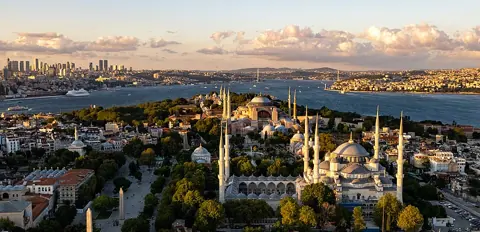
Hagia Sophia and the Blue Mosque face each other across Sultanahmet Park, and you might expect them to work the same way. They don't. Each is run by a different institution, and that is why one charges foreign visitors, one does not, and a third site nearby sells a €25 ticket with "Hagia Sophia" in its name.
Who charges what, and why?
Hagia Sophia is legally a mosque belonging to a religious endowment, or waqf. According to the official Ayasofya-i Kebir Cami-i Şerifi website, run by the Presidency's Directorate of Communications, Sultan Mehmed II endowed the building as a mosque after 1453 and made its continued use as a mosque a condition of the endowment. It reopened for prayer in July 2020. The Presidency of Religious Affairs (Diyanet) still marks that anniversary each year, most recently on 24 July 2026.
The visitor ticket comes from the waqf side of the state, not the museum side. On 12 January 2024, TÜRSAB relayed a letter from the Istanbul regional office of the General Directorate of Foundations (Vakıflar). It said the gallery floor would open to visitors on 15 January 2024 and that the building would have two entrances from then on:
- Turkish citizens coming to pray keep using the worship entrance, free of charge.
- Tourists visiting the gallery buy a ticket and use the visitor entrance.
- The fee is €25 per person.
We could not find a 2026 official tariff for the gallery. A commercial visitor guide updated in August 2026 still lists €25. It also says children under 8 enter free, the visitor entrance is on the north-east side facing the Bosphorus, and the Museum Pass Istanbul is not accepted.
The Blue Mosque sits outside this system. It does not appear on the Ministry of Culture and Tourism's list of museum and site fees, and none of the official sources we read mentions a ticket for it. UNESCO's Historic Areas of Istanbul listing names both buildings as part of the World Heritage property, the "6th-century Hagia Sophia" and the "17th century Blue Mosque". That listing protects the buildings but does not set their visiting rules.
How do prayer times affect a visit?
Both buildings host the five daily prayers, and tourist access pauses around them. The commercial guide cited above gives visitor hours of 09:00 to 19:00, a pause for each prayer, and the longest closure on Friday from 12:00 to 14:30. We could not confirm those hours from an official page, so treat them as a guide and check at the door.
The prayer times themselves are official. The Diyanet publishes them for each city, and in Istanbul they move a little every day. From the Diyanet's Istanbul timetable:
| Date (2026) | Noon (öğle) | Afternoon (ikindi) | Sunset (akşam) |
|---|---|---|---|
| 27 September | 13:00 | 16:21 | 19:01 |
| Friday 2 October | 12:59 | 16:15 | 18:53 |
| Friday 9 October | 12:57 | 16:07 | 18:41 |
| Friday 16 October | 12:55 | 15:58 | 18:30 |
| Friday 23 October | 12:53 | 15:50 | 18:20 |
Friday noon is when the Friday congregational prayer takes place, which is why the commercial guide gives a longer closure on that day. As autumn goes on, the afternoon and sunset prayers move earlier. By late October there are only about two and a half hours between them, so a late-afternoon plan to see both mosques has less room.
What to wear, and what happens at the door
The UK Foreign Office's travel advice for Türkiye, updated 21 September 2026, says to "dress modestly if you're visiting a mosque or a religious shrine". The commercial guide goes further for Hagia Sophia: shoulders and knees covered, a headscarf for women, and shoes removed, with coverings handed out at the entrance. The same basics are sensible for the Blue Mosque:
- Long trousers or a skirt below the knee, and sleeves that cover the shoulders.
- A scarf for women, carried with you rather than borrowed.
- Clean socks, since shoes come off at the door.
The Foreign Office also asks visitors to get permission before photographing people, which matters in a building where people are praying.
Planning both in one morning
These examples use the figures above: €25 for the gallery (official), and the under-8 exemption and hours (commercial guide only).
- Two adults: Hagia Sophia gallery 2 × €25 = €50. The Blue Mosque adds nothing that we could find. The History and Experience Museum would be another 2 × €25 = €50, so doing all three costs €100.
- Two adults with children aged 10 and 6: if the under-8 rule applies at the door, the gallery costs 3 × €25 = €75. At the History and Experience Museum, the Ministry's page confirms children under 8 enter free, so the same family also pays €75 there.
A workable order for a weekday is Hagia Sophia at opening, the Blue Mosque after that, and a break before the noon prayer. On a Friday, finish both before about 12:00 or come back after mid-afternoon. For how Hagia Sophia's fee fits with other ticket spending, see our Museum Pass Istanbul guide.
On the day, check two things before you leave: the Diyanet noon time for that date, and whether a Friday or a religious holiday falls on your plans. If the Hagia Sophia queue is long near noon, see the Blue Mosque first and come back after the prayer.