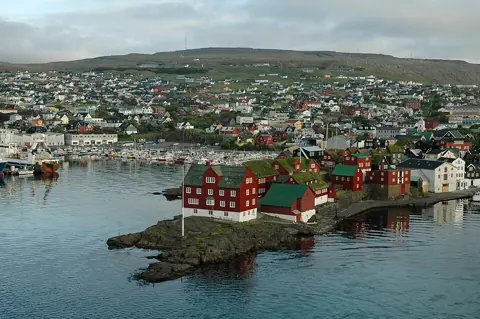
The Faroe Islands belong to the Kingdom of Denmark, and Denmark is an EU and Schengen member — but the Faroe Islands themselves are neither. That distinction is not a technicality; it changes what document you need and whether your visit counts toward a Schengen 90-day limit.
An EU and Schengen member's territory that is outside both
The Faroe Islands have self-government within the Kingdom of Denmark and have never joined the EU, a status that predates Denmark's own EU membership and has been maintained by choice ever since. Being outside the EU also puts the islands outside Schengen, since Schengen membership runs through EU or associated-state agreements that the Faroe Islands were never party to.
The Danish Immigration Service states this plainly for anyone applying for a visa: "A Danish/Schengen visa does not grant permission to enter the Faroe Islands or Greenland." If you are a nationality that needs a visa to visit at all, the standard Schengen or Danish visa does not by itself cover a Faroese stop — you need to indicate, when applying, that you want the Faroe Islands included, or apply for a separate authorisation specific to the islands.
Why most trips still route through Denmark
There is no need to overstate the friction here: for most visitors, especially those from countries with visa-free access to both the Schengen Area and the Faroe Islands, this distinction causes no practical difficulty at all. But the Danish Immigration Service is explicit about why the issue arises in the first place: "You will most likely also need a Schengen visa, since most travel to these two countries goes through a Schengen country, such as Denmark." In practice, this means a nationality that requires a visa for Schengen travel will typically need both the Schengen leg covered (for the Danish connection) and the Faroese leg covered separately, rather than assuming one document handles the whole itinerary.
Check your specific requirement with the Danish Immigration Service or a Danish embassy well ahead of booking if your nationality requires a visa for Schengen travel at all — the two-permission structure is exactly the kind of detail worth confirming before you commit to flights.
Your Schengen 90-day count and the Faroe Islands
The Schengen 90-in-180-day allowance, now tracked through the EU's Entry/Exit System, applies to time spent inside the Schengen Area. Because the Faroe Islands are outside that area, days spent there are not part of that count — the same logic that applies to Ireland, Jersey and the other non-Schengen territories covered elsewhere in this cluster. Only the time you actually spend on Danish or other Schengen soil, including any connection through Copenhagen or another Schengen airport, counts toward your 90 days.
What arriving in Tórshavn or Vágar actually involves
Since the Faroe Islands are outside the EES, arriving there does not involve the biometric registration process used at Schengen borders. You go through the islands' own entry check, which is a Danish-administered but Schengen-independent process, separate from anything you may have already gone through if your routing passed through a Schengen airport first.
This is worth knowing if you are also figuring out how to get to the Faroe Islands and move between them — the practical routing question and the border-rules question are related but separate, and getting the document requirement wrong is a costlier mistake than getting the ferry schedule wrong.
Currency, identity documents and everyday practicalities
None of the Schengen distinction changes the currency you use or the language you will see signage in, both of which follow Denmark's and the islands' own arrangements rather than any EU framework. What it does change is which document check applies at the point of entry, and that check is administered separately from anything you may have already cleared on a Schengen leg of your journey. Carry the same passport you would use anywhere else in Europe; the difference is procedural, in which system checks it, not in what document you need to hold.
A useful comparison: Ireland's non-Schengen status
The structural situation here resembles Ireland's, another part of Europe outside both Schengen and the EES, though for a different underlying reason — Ireland is an EU member that opted out, while the Faroe Islands are a self-governing Danish territory that never joined the EU at all. In both cases, the practical consequence for a traveller is the same: no EES biometric registration on arrival, and no Schengen day-count impact from time spent there.
The islands' physical remoteness compounds the paperwork question
Because most routes to the Faroe Islands require a Danish or other Schengen connection, getting the document requirement wrong is not something you can easily correct once you are already travelling. Confirm your specific visa or authorisation needs well before departure, particularly given how few daily flight options exist to Vágar Airport compared with a typical Schengen destination.
What to check before you rely on this
Visa and entry-document requirements vary by nationality, and this guide has not verified country-by-country specifics. Before you book, confirm your own requirement directly with the Danish Immigration Service's Faroe Islands and Greenland visa page, which is the official source for whether your Schengen visa needs a Faroese addition or a wholly separate authorisation.