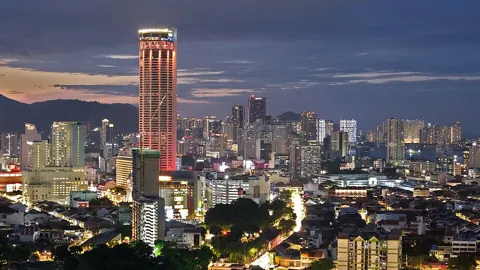
Most writing about George Town treats its World Heritage status as an atmosphere. It is an instrument, and an unusually detailed one — detailed enough that you can look up what any given shophouse may legally become.
The plan is gazetted, and it is statute-backed
The document's Malay title is "Rancangan Kawasan Khas Tapak Warisan Dunia George Town"; its English running header reads "Special Area Plan: George Town, Historic Cities of the Straits of Malacca". Its cover page carries the gazette particulars: state government gazette volume 60, number 18, supplement number 1, dated 1 September 2016, notification number 665.
Its power comes from section 16B of the Town and Country Planning Act 1976, which the plan itself quotes as providing for "a preparation of a SAP which amongst others may include conservation or management practice for a specified area", with the stated purpose of gazetting it being "to ensure that sufficient legal powers are entrusted into the implementation of the CMP". UNESCO's own 2011 report on the property confirms the point: such plans "are statutory with legal support."
The approval chain runs through the state: a draft goes with objections to the Penang State Planning Committee, and on approval to the State Authority for assent, after which it comes into force. It was prepared jointly by the national planning department's Penang office, the island city council and George Town World Heritage Incorporated, and the State Party told UNESCO in 2023 that it "will be reviewed every 5 years".
Before it, control rested on softer material: design guidelines for conservation areas used since 1987, guidelines for conservation areas and heritage buildings gazetted on 23 August 2007, a 1996 policy plan, and a heritage management plan adopted by the state planning committee on 12 February 2008. The 2016 plan is the first statutory instrument.
Four categories, not two
Almost every summary describes two building categories. The plan defines four, and the two additional ones are where redevelopment happens.
| Category | What it is | Buildings and sites | Share |
|---|---|---|---|
| Category I | Exceptional interest; gazetted or registered under heritage legislation | 82 | 1.66% |
| Category II | Special interest, "warrant every effort being made to preserve them" | 3,771 | 76.54% |
| Infill | Empty land or temporary structure; compatible redevelopment permitted | 573 | 11.43% |
| Replacement | Building "without any significant value"; sensitive redevelopment permitted | 587 | 11.71% |
| Total | 5,013 | 100% |
The plan's own narrative adds the geography: 62 of the 82 Category I buildings are in the core zone, nine of them gazetted under the National Heritage Act; Category II buildings are distributed approximately equally between core and buffer; the 573 infill sites are "mainly located along the waterfront between Beach Street and Weld Quay".
The nine gazetted Category I buildings, as of 2012, are Fort Cornwallis, the Queen Victoria Memorial Clock Tower, Penang City Hall, the Penang State Museum Board Building, Kapitan Keling Mosque, Lebuh Acheh Malay Mosque, St George's Church, the Penang High Court Building and Leong San Tong Khoo Kongsi.
Category II is not only shophouses. The heritage body's own description includes "compounds, boundary walls, gateposts and gates, landscapes, enclaves, granite pathways and sites" and "historic street furniture such as granite posts and chains, fountains, lamp posts, post boxes, tramlines and trolley bus poles, fire hydrants and fire assurance plaques".
What each may do differs sharply. For Category I, "the use should remain as originally intended", any adaptation must be of similar use with minimal impact on cultural significance, and planning permission plus a Heritage Impact Assessment including cultural impact is required. And "the height of Category I buildings must be maintained." Category II may go up, to the limit in the next section, "at the merit of each application".
| Category | 2008 nomination: core | 2008: buffer | 2008 total | 2016 gazetted plan |
|---|---|---|---|---|
| Category I | 57 | 14 | 71 | 82 |
| Category II | 1,658 | 1,914 | 3,572 | 3,771 |
| Infill | 301 | 206 | 507 | 573 |
| Replacement | 262 | 237 | 499 | 587 |
| Total | 2,278 | 2,371 | 4,649 | 5,013 |
The direction of the change is the same in every row, which is what makes the pair readable: the later survey found more of everything rather than reclassifying buildings between categories. What it does not let a visitor do is check a specific address against a count, because neither document publishes the building-by-building list that produced either total.
The naming and heritage status of the drink is examined in the white coffee guide.
Eighteen metres, and the loophole that was opened and closed
The height rule is short: "Increase in height of all heritage buildings in the WHS (Category II) and the allowable height for Infill and Replacement sites may be built to a maximum of 18 metres from ground level to the roof eave." The stated reason is visual: protecting "the visual legibility of the important landmarks and the continuity of its roofscape".
The history behind that sentence is the most consequential episode in the property's record, and it happened between nomination and inscription.
The guidelines annexed to the nomination file submitted in January 2007 prescribed a maximum of 18 metres both in the property and in the buffer zone. Then, in UNESCO's account: "following the submission of the Nomination File (but before inscription), these Guidelines had been modified by the introduction of a provision allowing for the construction of buildings higher than 18 metres, within the World Heritage property and its buffer zone, for land plots larger than 50,000 square feet and located next to buildings more than five storey high. This provision provided the new proposed developments with a legal basis for approval, given that these two conditions applied to all four cases."
Four projects had been approved on that basis. Two sat inside the inscribed property: a twelve-storey hotel immediately behind a row of two and three storey historic buildings at the harbour front, which UNESCO assessed as impacts "considered to harm the Outstanding Universal Value"; and a development of six towers up to thirteen storeys beside the former railway building's clock tower, which "would significantly impact on the Outstanding Universal Value". Two sat in the buffer zone: a fifteen-storey building, revised down from twenty-eight, assessed as not causing significant harm; and a twenty-three storey hotel in the outer corner of the buffer, whose impact "would be relatively minor".
The Committee's 2009 decision records the outcome in plain terms: "The provision allowing building higher than 18 metres within the inscribed property under certain circumstances in Georgetown has been abolished", the two in-property projects were to be "reduced to 18 metres", and "there will be no approval given for developments higher than 18 metres in the buffer zone until such time as the Special Area Plans are adopted." That freeze was reaffirmed in 2011 and again in 2013.
Two further limits sit around the 18 metres. The State Party told UNESCO in 2023 that "the development within the buffer zone is restricted to four storeys" — the same commitment made in the nomination dossier and repeated in the 2008 advisory evaluation. And the plan's own 18-metre text does not distinguish core from buffer; the four-storey buffer restriction comes from the State Party's reporting rather than from that clause.
Zone areas, for scale: core 109.38 hectares, buffer 150.04, giving George Town 42.16 and 57.84 per cent of its own two-zone total. UNESCO's record for the whole two-city property gives 154.68 hectares of property and 392.8 of buffer, which is a different unit — it includes Melaka.
The counter-pointing method and its price spread are set out in the nasi kandar decoder.
Budget hotels are not permitted
The most practically useful table in the plan is its schedule of non-permissible activities, and it has exactly two entries.
Non-permissible in the World Heritage Site: swiftlet farming, and budget hotels.
Boutique and star-rated hotels fall into the controlled and restricted list instead, with two conditions: "existing premises that exist prior to the SAP can remain and subject to compliance to technical requirements", and new premises "can be considered subject to compliance to technical requirements" in three named zones only — waterfront, trade, and tourism and leisure.
Any change of land or building use requires planning permission, and a change of use that may affect the property's values triggers a Heritage Impact Assessment with a cultural-impact component. The plan's adaptive-reuse test is explicit that original use is preferred but not mandatory: "ideally the best use will very often be the use for which the building was originally designed for… However, not all original uses will now be viable or necessarily appropriate. A compatible or adaptive re-use of heritage buildings may be permitted to ensure survival of such buildings."
The plan also contains its own anti-touristification strategy, worded more bluntly than such documents usually manage. Its stated aim is "avoiding overwhelming affects of gentrification and touristification and encourage the return of inner city communities", with actions including an inventory of hotels by classification "monitoring impact of hotel growth for future review to identify the limits of acceptable charge", a detailed hotel classification guide, enforcement "to effect closure on those in non-complience with the law", and encouragement of affordable housing conservation.
No rule specific to homestays, short-term rental or online platform letting could be found in the plan or elsewhere. What is on the record is a State Party admission from 2023: "There are some hostels or guest houses set up in the property without a license."
Two protective overlays exist alongside the activity schedule. A Residential Overlay and Cultural Enclave Overlays sit within a Special Zone which "has the highest concentration of significant cultural sites and Category I buildings within the WHS" and therefore "warrants the strictest form of land use control". For the clan jetties specifically: "The Jetty Zone should retain its dominant residential component, with allowance for limited tourism related activities and sundry shops within the residential premises."
How a night market pitch is licensed is covered in the pasar malam census.
The population fell 30 per cent, and the plan says so
This is the finding that reframes the whole zone, and it is the plan's own.
The nomination's 2006 baseline put George Town's core zone at 9,376 residents and its buffer at 9,284, for 18,660 in total, against Melaka's 7,891. Then the gazetted plan, under the heading "Displacement and Loss of the Residential Population in the WHS", states: "Whilst the WHS still have a relatively large pool of residential population, the threat of displacement and loss of the population is real and has to be contained before it gets into a state of beyond control. Already in George Town, a survey of the area has shown a 30% decline in population since the year 2000."
Land use corroborates it from another direction. Residential use accounted for 13.94 per cent of land, or 21.07 hectares, in 2010 — "a reduction of 4% from the year 2005, or 12.1% from the year 2000."
And the plan names the mechanism without euphemism: development pressure has led to "shophouses being turned into boutique hotels and commercial premises, and this, in turn, would impact upon the living population who may be uprooted", who "could find that their homes being converted to other uses that threaten their way of life, their families, and their living space."
So the budget hotel prohibition and the three-zone restriction on new boutique hotels are not aesthetic preferences. They are the stated response to a documented population loss, written into the same instrument that documents it.
Sixty-three traditional trades, inventoried
The trades that give the zone its character are also the subject of a systematic official inventory, which is more than most heritage cities manage.
George Town World Heritage Incorporated published a Directory of Traditional Trades and Occupations in the George Town World Heritage Site in 2012, in two editions — indexed by trade and indexed by street — running to 49 pages. Its inclusion criteria are published: a business more than 50 years old, founded in 1962 or earlier, is recommended for inclusion; one 25 to 50 years old can be considered; inheritance from family is a recommending factor; and a business qualifies as special if it meets intangible cultural values such as being rare locally, involving manual skill or traditional handicraft, being associated with customs, observances, rituals or festivals, needing specific traditional tools or raw materials, or supplying a specific market.
The index runs to 63 trade categories, and reading the list is the fastest way to understand what the zone is. Among them: bertam chik, cane and rattan craft; charcoal shop; fortune-telling; keys and locksmith; money-changer; noodle and poh piah skin maker; pawnshop; philately and numismatics; pillow maker and beddings supplier; religious and ceremonial goods; rubber-stamp maker and electro-engraver; specialist packaging; spice wholesaler, spice mill and fresh spice paste maker; stevedoring and shipchandling; traditional massage and blind massage; traditional medicine and healing; weighing equipment; woodwork and woodcarving.
The survey behind it was substantial: the intangible cultural heritage inventory was "initiated in 2012 to identify and document the traditional trades, craftspeople and cultural practitioners in George Town" and "comprised door-to-door surveys of over 5,000 premises, followed by a sample of 20 case studies for in-depth documentation". A follow-on project filmed fifteen artisans between 2015 and 2017 — watch repairers, electroplaters, optometrists, a canvas and leather goods maker, rattan crafters, a trishaw maker, joss stick makers, a tailor, mahjong makers, shoemakers, a songkok maker, goldsmiths, dhobis, a Chinese physician and an Al-Quran publisher — screened publicly on 1 April 2018. A community-based inventorying pilot with UNESCO followed in 2019.
The directory publishes, per entry, the street name, house number, company name, company name in Chinese, year founded and a short description. It does not publish a total: entry numbering restarts within each trade category, so no aggregate figure exists.
Enforcement, by the plan's own account
The plan is candid about why enforcement is difficult, in a passage worth quoting because it is the State's own diagnosis. The listed reasons for delays and inefficiencies are: "Some parts of the law and by-laws are not clear; Insufficient supervising officers and inspectors; The charging and conviction of offenders through the court of law are tedious and time consuming; The fines and penalties are not high enough to create a significant deterrence to potential offenders; and There are often interferences by politicians."
The institutional machinery exists. The city council's Heritage Department was established on 1 July 2011 and became a Heritage Conservation Department in 2015; its functions expressly include enforcement against unapproved building works inside and outside the World Heritage Site, and against dilapidated and dangerous buildings within it. Its published service timelines are specific: 30 days for planning permission heritage consultation and technical comment, 14 days for building plan comments and for permit, repair and mural applications, seven days for licensing comments, three working days to answer a complaint.
Above that sit two review panels. A Technical Review Panel evaluates applications and proposed developments, composed of the city secretary, the heritage body's general manager, architects, planners, engineers, non-governmental organisations, independent consultants and experts. A Public Arts Review Panel governs murals, on a stated rule that "only murals deemed relevant will be approved and retained, and all others will be removed".
The State Party's account of process is that "in cases of building works being carried out without the required permits, a stop work notice is issued" and "further contravention of the Building By-laws may result in fines or prosecution in court."
The one enforcement programme with published dates is the swiftlet one. UNESCO recorded in 2013 that the industry "is impacting severely upon the fabric of historic buildings", that the draft plans define it as non-permitted in the property and buffer, and that eradication action plans ran 2011 to 2012 with enforcement from January to December 2013, so that "all Swiftlet farming within the property and buffer zones should be removed by December 2013."
What this guide does not cover
No business, shop, hotel or building is recommended here, and no trade directory entry is reproduced. The directory is published and searchable; this guide describes its method and scope.
No enforcement figures are given, because none was found. Searches of the 417-page plan, the 2023 periodic report, the 2009, 2011 and 2013 state of conservation reports, the city council's heritage department pages and the heritage body's publications produced no count of enforcement actions, stop-work notices or unapproved demolitions. The single instance on the record is a historical one, the illegal demolition of the Metropole Hotel of 1900, noted in the nomination dossier without an aggregate.
Two numbers in this guide are official but old. The core zone population figures are 2006 estimates from the nomination, and the 30 per cent decline is the plan's own 2016 statement about a survey referenced to 2000 — no more recent resident count could be found. The Category I gazetted list is stated in the plan as being "as of year 2012".
No homestay or short-term-rental rule is quoted, because a full-text search of the plan for homestay, hostel, lodging, short-term and guest house returned only the activity-schedule entries above. And no total count of individual traditional-trade businesses is given: the published directory does not state one, and a count derived from its text would be arithmetic on a document rather than an official figure.